 Save
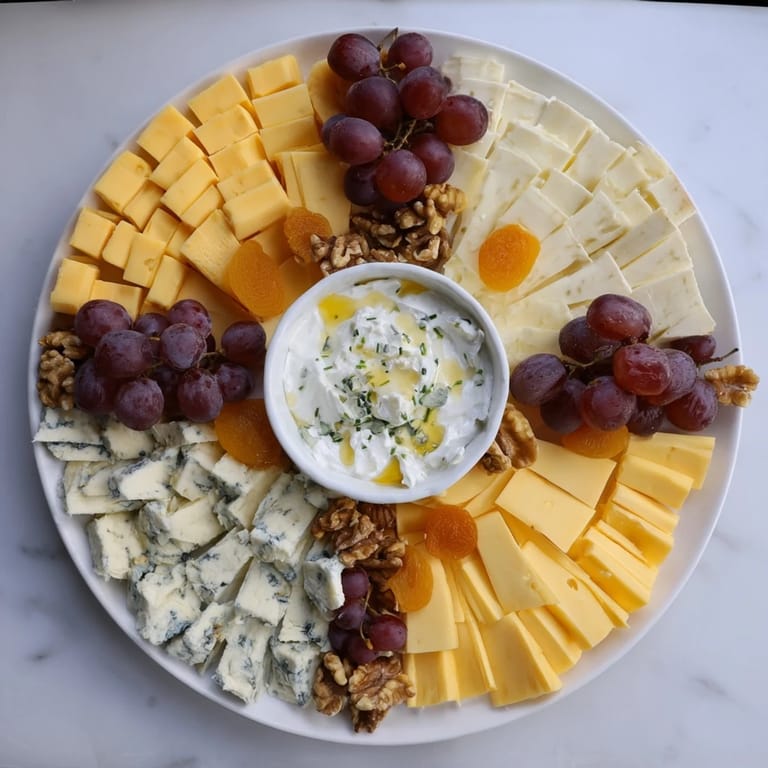
Save I discovered the magic of a good cheese board at a small gallery opening in Dublin, where a sprawling platter arranged like a Celtic cross caught everyone's eye before anyone even tasted it. What started as admiration turned into obsession when I realized the four-quadrant design wasn't just beautiful—it actually helped guests navigate flavors without overwhelming their palates. That night, watching people reach for different cheeses in sequence, I understood that presentation could be as important as the food itself. Now whenever I arrange this platter, I'm chasing that same moment of delight, that pause before the first bite.
My sister brought her fussy eaters to dinner last spring, and I was nervous about feeding them. But when that platter went down, even the pickiest one reached straight for the Manchego, and suddenly everyone was talking between bites instead of picking at their phones. That's when I knew this wasn't just about cheese—it was about creating a moment where people slow down and actually connect.
Ingredients
- Irish cheddar, cubed: Pick one that's firm but creamy; it holds its shape on the board and gives that satisfying sharpness that cuts through rich bites.
- Brie, sliced: The soft anchor of your platter—slice it just before serving so it doesn't sweat or dry out, and it'll be at peak creaminess.
- Blue cheese, crumbled: Use whatever intensity calls to you; the honey drizzle mellows even the boldest varieties beautifully.
- Manchego, sliced: This Spanish cheese brings a nutty warmth that bridges the gap between sharp and creamy, and it's stunning to look at.
- Sour cream or Greek yogurt: Greek yogurt makes a tangier dip, while sour cream stays richer—choose based on your mood and what your guests lean toward.
- Fresh chives, finely chopped: The small detail that makes people ask what's in your dip; don't skip this.
- Lemon juice: Just a teaspoon brightens everything and keeps the dip from tasting flat.
- Seedless red grapes: They catch light beautifully and add juicy contrast to every cheese bite.
- Dried apricots: Their sweetness plays perfectly against sharp cheddar and pungent blue cheese.
- Walnuts: Toast them lightly beforehand if you want extra crunch and depth, or leave them raw for a cleaner taste.
- Honey: Drizzle it strategically over the blue cheese to create both visual drama and flavor magic.
- Rustic crackers: Pick ones substantial enough to hold cheese without crumbling, with enough texture to complement, not compete.
- Baguette, sliced: A thin slice toasted briefly in a warm oven becomes sturdy enough for even the softest cheeses.
Tired of Takeout? 🥡
Get 10 meals you can make faster than delivery arrives. Seriously.
One email. No spam. Unsubscribe anytime.
Instructions
- Make your dip moment:
- Combine sour cream or yogurt with chives, lemon juice, salt, and pepper in a small bowl, stirring until everything is evenly distributed and the color is flecked with green. Taste and adjust the lemon—this is your secret flavor bomb, so don't hold back.
- Center your canvas:
- Place the dip bowl dead center on your largest round platter, as if you're setting the heart of a compass. This becomes your anchor point for everything else.
- Divide into quadrants:
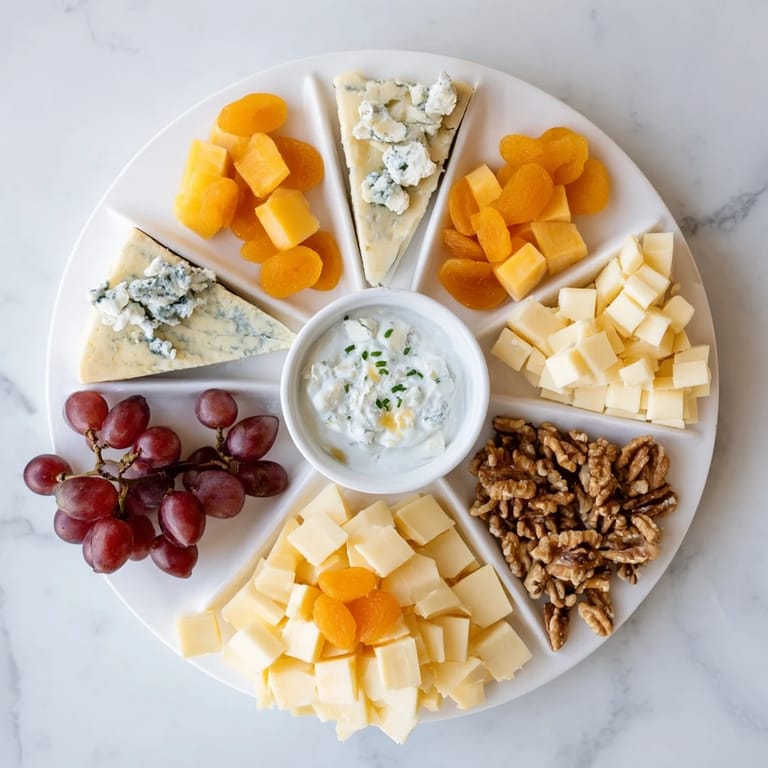
- Mentally or lightly mark four sections radiating from that center bowl, like you're slicing a pie into four equal pieces. Each section gets its own cheese type, fanned or grouped however feels natural to your hands.
- Arrange the cheeses:
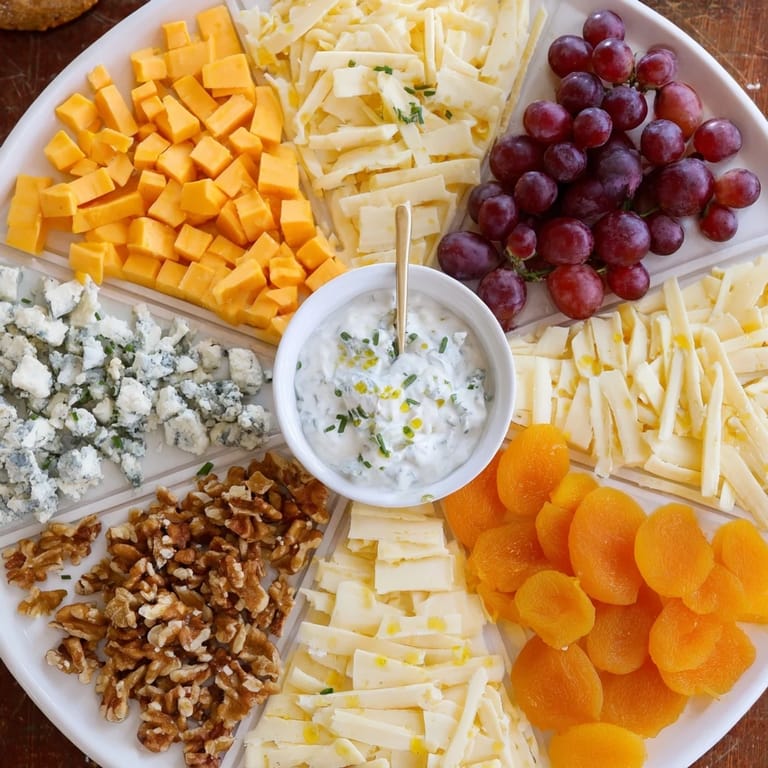
- Start with one cheese per quadrant—cheddar in one, Brie in another, blue cheese in the third, Manchego in the fourth. Overlap slices slightly or nestle cubes together so each quadrant feels generous and inviting.
- Fill the gaps with color:
- Scatter grapes, apricots, and walnuts between the quadrants, mixing them so no two empty spaces look identical. The randomness is what makes it feel alive and intentional, not stiff.
- Crown the blue cheese:
- Drizzle honey over just the blue cheese section, letting it catch the light and signal to guests that this is where something special happens. A light hand here goes further than you'd think.
- Frame it out:
- Arrange crackers and baguette slices around the outer edge of the platter in a loose circle, angling them slightly so they're easy to grab without disrupting the artful center.
- Serve at the right moment:
- Let everything sit at room temperature for at least fifteen minutes before guests arrive so the cheeses are soft enough to taste their best and the flavors have woken up.
 Save
Save There's something profound about watching a table go quiet when beautiful food arrives, then louder and livelier as people taste and share. That's the real gift of a board like this—it doesn't just feed bodies, it feeds the rhythm of a gathering.
The Art of Cheese Board Architecture
Building a platter is exactly like decorating a room: you need balance, contrast, and a focal point that keeps drawing the eye back. The Celtic cross isn't just a pretty shape—it's a system that guides people through flavors and textures naturally, without overthinking. I've learned that the moment you stop worrying about perfect symmetry and start trusting your instincts about placement, the board becomes genuinely beautiful. Asymmetry that feels intentional beats rigid perfection every single time.
Pairing Beyond the Obvious
Everyone talks about wine pairings, and yes, a crisp Sauvignon Blanc is glorious with this spread. But I've discovered that a cold cider works just as well, and sometimes even a light beer cuts through the richness in ways white wine can't. The real secret is serving your beverages cold enough that they shock the palate awake between bites, making each cheese taste fresher than it did before. Think of your drink choice as a conversation starter, not just an afterthought.
Seasonal Swaps and Personal Touches
The beauty of this formula is that it's infinitely adaptable—you can swap out cheeses based on what's calling to you or what your guests love. In autumn I'll add apple slices instead of some of the grapes, and in winter I might swap the apricots for dried figs or cranberries. The honey drizzle stays the same because it's the heart of the whole thing, but everything else can shift. Once you've made this platter once, you'll instinctively know how to make it yours.
- Keep a stash of good honey on hand; it turns even mediocre blue cheese into something memorable.
- Toast your walnuts in a dry pan for two minutes before serving and they become the most craveable thing on the board.
- If you're making this more than a few hours ahead, keep the soft cheeses wrapped in the fridge and add them right before guests arrive.
 Save
Save This platter has taught me that some of the best meals aren't cooked—they're curated. When you put care into presentation and give people beautiful things to gather around, everything else falls into place naturally.
Recipe Questions & Answers
- → How should the cheeses be arranged?
Divide the platter into four quadrants, placing each cheese type in its own section around the central dip for a balanced visual effect.
- → What dip complements the cheeses?
A creamy dip made with sour cream or Greek yogurt mixed with fresh chives, lemon juice, salt, and pepper enhances the flavors.
- → Can the platter accommodate dietary preferences?
Using vegetarian cheeses keeps the platter suitable for vegetarian diets, but always check cheese labels for animal rennet.
- → What are good accompaniments to add texture and variety?
Fresh grapes, dried apricots, walnuts, and a light honey drizzle provide a range of textures and sweet notes.
- → How to best serve the platter?
Arrange rustic crackers and sliced baguette around the edge and serve cheeses at room temperature to maximize flavor.