 Save
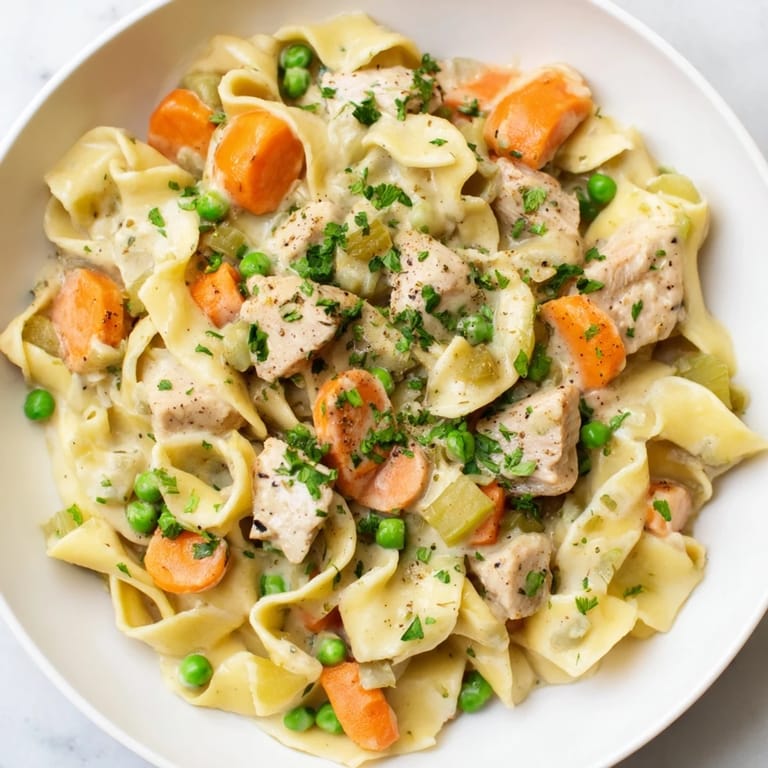
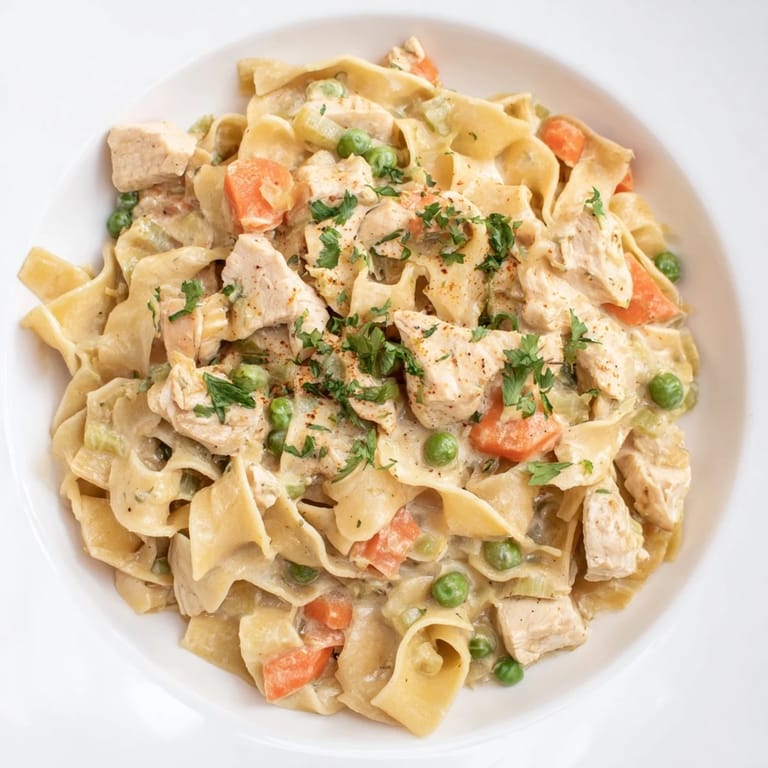
Save There's something about a bowl of creamy chicken and egg noodles that stops time. I discovered this dish during a particularly gray November when my neighbor brought it over, and I've been chasing that same warm, enveloping comfort ever since. The way the sauce clings to each noodle, how the chicken becomes so tender it barely needs chewing—it all felt like a gentle hug in edible form. Now I make it whenever someone needs feeding or when I need feeding myself.
I remember my sister asking for the recipe after I made this for her kids, saying it was the only way she could get them to eat carrots without complaint. That moment—watching three skeptical children ask for seconds—taught me that comfort food isn't about complexity, it's about showing up with something warm and honest.
Ingredients
- Chicken breasts or thighs: Use thighs if you want more forgiving texture; they stay tender even if you accidentally overcook them, whereas breasts can turn stringy in an instant.
- Butter and olive oil: The combination gives you browning power and flavor—butter alone would burn too quickly.
- Yellow onion, garlic, carrots, and celery: This holy trinity of aromatics builds the foundation; don't skip the garlic or you'll miss a whole dimension of savor.
- All-purpose flour: This becomes your thickener, creating that silky roux that transforms into sauce.
- Chicken broth and cream: Low-sodium broth lets you control the salt; the cream is what makes this dish feel indulgent without being overwhelming.
- Dijon mustard, thyme, paprika: These aren't just seasonings—they add personality and depth that keeps the dish from tasting one-note.
- Egg noodles: Wide noodles hold sauce better than thin ones, and there's something nostalgic about them that makes sense here.
- Frozen peas: They add color, sweetness, and texture; no need to thaw them first.
Tired of Takeout? 🥡
Get 10 meals you can make faster than delivery arrives. Seriously.
One email. No spam. Unsubscribe anytime.
Instructions
- Season your chicken:
- Toss the bite-sized pieces with salt and pepper right before cooking so the seasoning sticks.
- Brown the chicken:
- Heat your butter and oil together until the pan is almost smoking—you want that golden crust. Cook the chicken until it's lightly browned and cooked through (about 5–6 minutes), then set it aside on a plate.
- Build your aromatics:
- In the same pot with all those lovely browned bits, soften your onion, carrots, and celery for 4–5 minutes until they start to turn tender. Add minced garlic and let it perfume the air for just 1 minute.
- Make the roux:
- Stir in the flour, coating all the vegetables, and cook for 1–2 minutes until it smells nutty and toasted.
- Create the sauce:
- Slowly whisk in the broth, milk, and cream—going slow prevents lumps. Add the Dijon mustard, thyme, parsley, paprika, and taste for salt and pepper.
- Simmer and thicken:
- Let the sauce bubble gently for 5 minutes, stirring often, until it coats the back of a spoon and no longer tastes floury.
- Cook the noodles:
- In a separate pot, cook your egg noodles according to package directions, then drain and set aside.
- Bring it all together:
- Return the chicken to the sauce, add the frozen peas, and simmer for 2–3 minutes until everything is hot and the peas are tender. Fold in the cooked noodles and toss gently until every strand is coated.
- Finish with freshness:
- Tear fresh parsley over the top if you have it—it brightens everything.
 Save
Save The first time I made this for my partner on a random Tuesday night, they looked at the bowl, then at me, and said, 'You did this?' It felt like the highest compliment—proof that the simplest dishes, made with attention, become the ones people actually remember.
Building Flavor Layers
The secret to this dish tasting rich and complex instead of one-dimensional is layering flavors at different stages. The browned chicken releases savory depth, the sautéed vegetables develop sweetness, the flour toasts into nuttiness, and the mustard and herbs add brightness at the end. Each step builds on the last, which is why you can't really rush it or combine steps.
The Sauce-to-Noodle Ratio
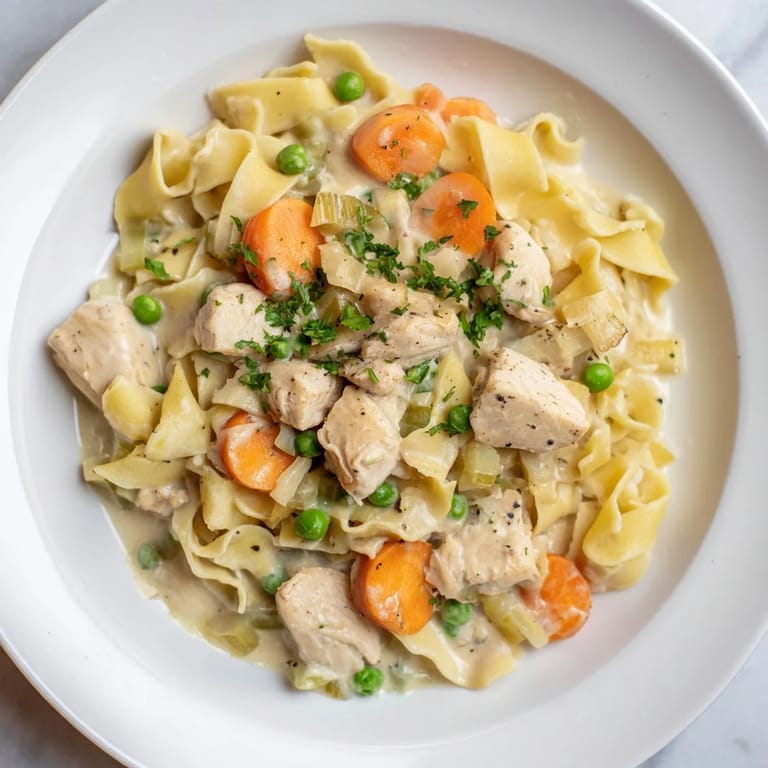
I've made this dish too thin (forgettable) and too thick (gluggy), and I've learned the sauce should move when you tilt the bowl but still cling to the noodles. The key is tasting as you go—if it's too thin after simmering, let it bubble a minute longer; if it's too thick, whisk in a splash of broth or cream.
Making It Your Own
Once you understand how this works, you can adapt it without losing the soul of the dish. Some nights I add a splash of white wine when the vegetables are sautéing (it burns off, leaving only flavor). Other times I stir in sautéed mushrooms for earthiness or a handful of fresh spinach at the very end.
- A rotisserie chicken works beautifully if you're short on time—just shred it and add it at the end instead of cooking it from raw.
- If cream bothers your stomach, use all broth and a touch of Greek yogurt stirred in at the end for tanginess without the dairy heaviness.
- Serve this over mashed potatoes or with a crisp green salad to balance all that richness.
 Save
Save This is the kind of dish that asks nothing of you except to show up and cook it. Everything else—the comfort, the connection, the satisfaction—happens on its own.
Recipe Questions & Answers
- → How do I prevent the chicken from drying out?
Cook the chicken over medium-high heat just until browned and cooked through, about 5–6 minutes, to keep it tender and juicy.
- → Can I use a different type of noodle?
Yes, wide egg noodles work best, but you can substitute with pasta like fettuccine or pappardelle for a similar texture.
- → What thickens the sauce?
A roux made from butter, flour, and the incorporation of broth and dairy helps create the rich, creamy consistency.
- → Are frozen peas a good substitute for fresh?
Frozen peas maintain their sweetness and texture well when added towards the end of cooking, making them a convenient choice.
- → Can I add other vegetables for extra flavor?
Absolutely. Mushrooms, green beans, or zucchini can be sautéed with the aromatics to enhance taste and nutrition.