 Save
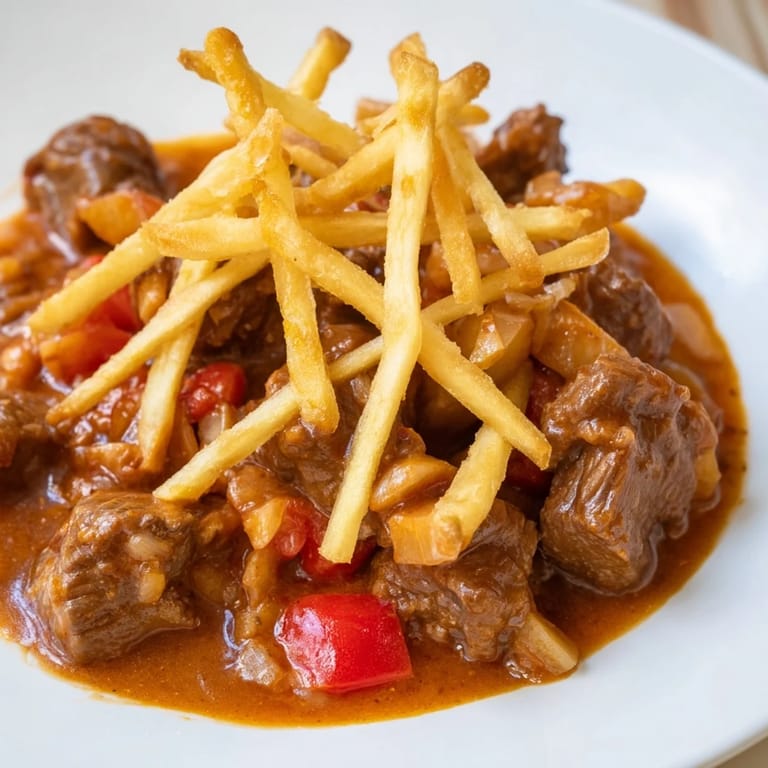
Save I discovered Czech goulash with potato strips on a cold Prague evening, tucked into a narrow restaurant where the kitchen seemed to occupy half the space. The owner, who barely spoke English, simply set down a steaming bowl and watched as I took my first spoonful of that deep paprika-red sauce clinging to impossibly tender beef, then crunched through golden potato matchsticks scattered on top. That single dish rewired what I thought comfort food could be. Years later, I still chase that exact combination of warmth and texture, and the good news is that making it at home is far simpler than the alchemy it tastes like.
I made this for my partner on a night when everything had gone sideways, and I watched their shoulders drop about an inch as they tasted it. That's when I realized goulash isn't really about technique or ingredients—it's about giving someone a reason to sit down and stay awhile. The potato strips got a little too dark that first time, but no one cared.
Ingredients
- Beef chuck, 800 g in 2.5 cm cubes: This cut has enough fat and connective tissue to turn silky, not tough, during the long braise. Don't be tempted by leaner cuts.
- Sweet Hungarian paprika, 2 tbsp: This is non-negotiable—the soul of the dish. Mild, with a depth that's almost fruity, it's why the sauce turns that signature russet color.
- Vegetable oil, 2 tbsp plus 500 ml: The smaller amount browns the meat, the larger amount gets the potatoes golden and crackling.
- Onions, 2 large, finely chopped: They soften into the sauce and create its natural sweetness. Don't rush this step.
- Garlic, 3 cloves, minced: Add it after the onions soften, or it will burn and turn bitter in seconds.
- Caraway seeds, 1 tsp: Just enough to whisper through the sauce with an earthy, slightly minty note. This is what makes it taste Czech.
- Marjoram, 1 tsp: Underrated and essential—different from oregano, with a gentler, woodsy character.
- Tomato paste, 2 tbsp: Acts as a thickener and adds umami depth that balances the paprika's sweetness.
- Beef broth, 750 ml: Use homemade if you can, but good-quality store-bought works. This becomes the sauce, so its quality matters.
- Bell pepper, 1, diced: Adds brightness and texture. Add it toward the end so it doesn't dissolve entirely.
- All-purpose flour, 1 tbsp: Sprinkled over the meat and stirred in, it thickens the sauce naturally as the meat releases gelatin.
- Potatoes, 4 large, peeled: Cut into thin matchsticks just before frying. Thinner cooks faster and crisps better.
- Salt, pepper, and bay leaf: Bay leaf stays in during cooking, comes out before serving. Don't skip it.
Tired of Takeout? 🥡
Get 10 meals you can make faster than delivery arrives. Seriously.
One email. No spam. Unsubscribe anytime.
Instructions
- Start with the onions:
- Heat oil in your pot over medium heat and watch the onions soften into gold, about 8 minutes. They should smell sweet, almost caramel-like. This is the foundation of everything that follows.
- Bloom the spices:
- Stir in the garlic, caraway, and paprika, cooking for just 1 minute while stirring. You'll smell the shift immediately—it becomes fragrant and warm. This step keeps the paprika from catching and turning bitter.
- Brown the beef:
- Add the cubed meat and let it sit undisturbed for a couple of minutes, then stir. You're looking for that mahogany crust on all sides, about 5 minutes total. This caramelization is flavor you can't get back later.
- Build the sauce:
- Stir in tomato paste, marjoram, salt, pepper, and the bay leaf, letting everything coat the meat. Dust the flour over top and stir it through—it will seem dry at first, but that's correct.
- Add the liquid and simmer:
- Pour in the beef broth and bring it to a rolling boil, then drop the heat to low, cover, and let it barely bubble for 1.5 to 2 hours. Stir occasionally, more to check in than anything else. The meat should fall apart at a gentle push from a spoon when it's done.
- Prepare the potatoes:
- While the goulash works, use a mandoline or very sharp knife to cut the peeled potatoes into thin matchsticks. Immediately soak them in cold water for at least 15 minutes to rinse the starch, then pat them completely dry—this is the secret to crispiness.
- Fry until golden:
- Heat 500 ml of oil in a deep pan to 180°C (350°F). Working in batches so the oil stays hot, fry the potatoes until they're deep golden and crackling, about 3 to 4 minutes. Drain on paper towels and season immediately with salt while they're still hot.
- Finish and serve:
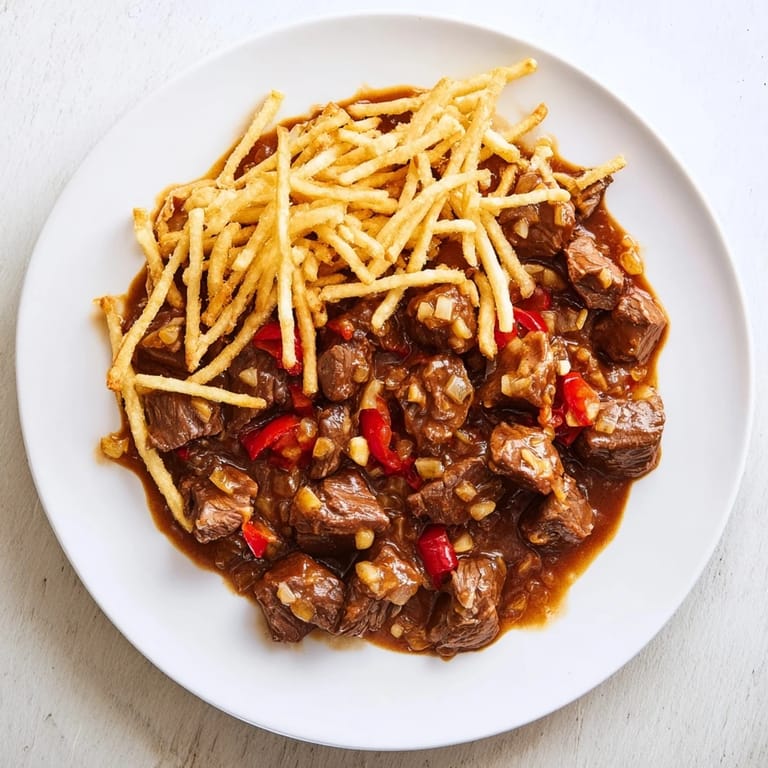
- Remove the bay leaf from the goulash, taste the sauce, and adjust salt and pepper if needed. Ladle the goulash into bowls and crown each one with a generous handful of crispy potato strips.
 Save
Save The first time my friend tasted this, she asked if I'd learned to cook in Prague, which made me laugh because I'd made it at least five times before it tasted the way I remembered. Goulash taught me that some dishes need practice not because they're difficult, but because you're chasing a feeling.
Why the Two-Hour Simmer Matters
Beef chuck is built for low, slow heat. The collagen in it converts to gelatin, which dissolves into the broth and creates that signature silky mouthfeel. Rushing it—even cooking it at a higher heat—produces tough, stringy meat instead. The two hours isn't a suggestion; it's the time it actually takes for the meat to transform.
The Potato Strip Technique
Potato strips are forgiving as long as you remember two things: they need to be thin and dry. A mandoline does this in seconds, but a sharp knife and patience work just as well. The cold water soak removes surface starch, which prevents them from sticking together and allows them to fry to a crisp rather than steam into softness.
Serving and Variations
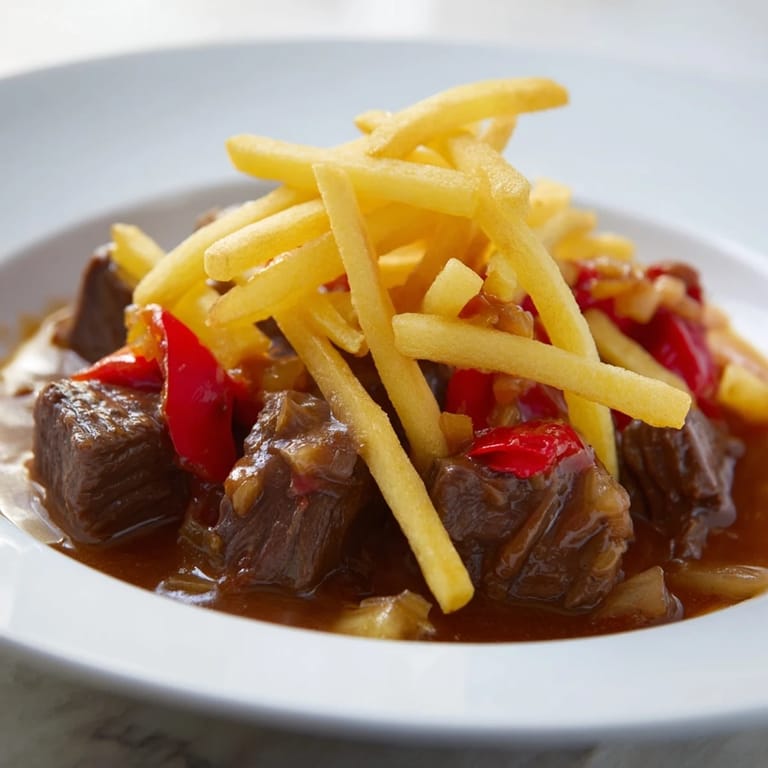
Serve the goulash hot in wide bowls so the potato strips have room to breathe and stay crispy. A dollop of sour cream stirred in at the table makes the sauce even richer, and fresh parsley adds color and freshness against the deep paprika red. Some people add a pinch of hot paprika or chili flakes for heat, and that's perfectly valid—this dish is flexible enough to meet you where you are.
- If you want it spicier, add a dash of hot paprika or a small pinch of cayenne when you bloom the sweet paprika.
- Leftover goulash reheats beautifully in a low oven covered with foil, staying tender and never drying out.
- Beer lovers should reach for a Czech Pilsner, but a light red wine like Pinot Noir works if that's what you have.
 Save
Save This dish asks very little of you except time and attention, and it repays you with comfort that tastes like it took all day. Make it once, and you'll find yourself making it again.
Recipe Questions & Answers
- → What cut of beef works best for Czech goulash?
Beef chuck is ideal due to its balance of marbling and tenderness, allowing it to become flavorful and soft during slow cooking.
- → How does paprika influence the goulash?
Sweet Hungarian paprika imparts a warm, smoky flavor and vibrant color, forming the base of the sauce’s distinct taste.
- → What is the purpose of caraway seeds in the dish?
Caraway adds a subtle, earthy, and slightly anise-like note that complements the richness of the beef and paprika spices.
- → How should the potato strips be prepared for the best crispiness?
Cut into thin matchsticks, rinse to remove starch, dry thoroughly, then fry in hot oil until golden and crunchy.
- → Can this dish be made gluten-free?
Yes, by substituting all-purpose flour with gluten-free flour, it remains suitable for gluten-sensitive diets.
- → What wines pair well with this hearty dish?
Light reds or Czech Pilsners complement the rich flavors without overpowering the palate.