 Save
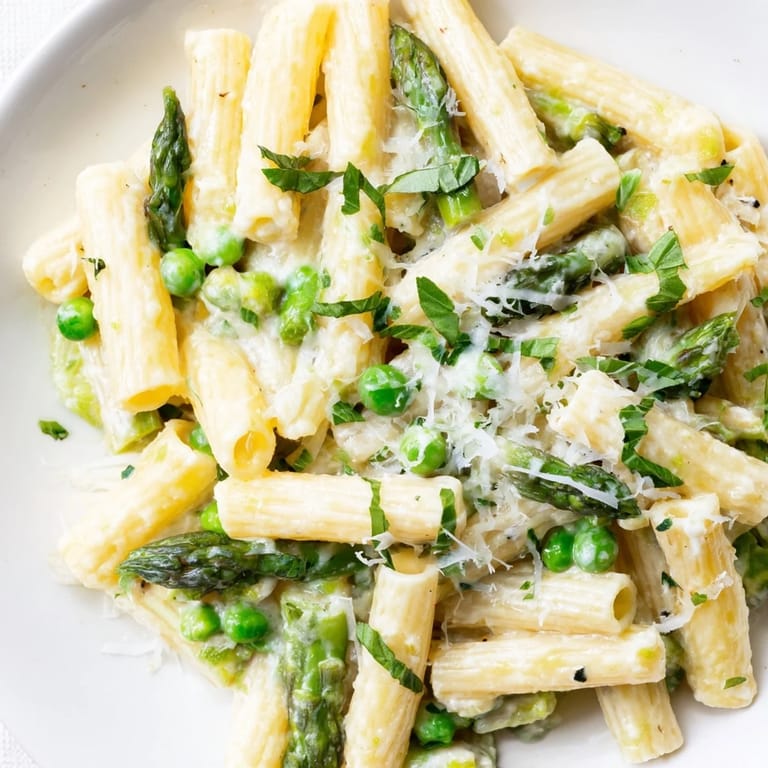
Save My upstairs neighbor brought me a basket of asparagus from the farmers market one Saturday, and I stood there holding it like I'd just been handed homework. I had penne in the pantry, some cream in the fridge, and the kind of hungry impatience that makes you inventive. What came together that afternoon wasn't fancy, but it tasted like spring had walked right into my kitchen. I've made it a dozen times since, always when the vegetables look too good to ignore.
I made this for a friend who claimed she didn't like peas, and she scraped her plate clean without saying a word. Later she texted asking what I'd done to make them taste like that. I hadn't done anything special, just cooked them quickly so they stayed sweet and bright. Sometimes the trick is just not overthinking it.
Ingredients
- Penne pasta (350 g): The ridges grab onto the creamy sauce and hold the small peas in place, and it cooks evenly every time.
- Asparagus (200 g, trimmed and cut into 2.5 cm pieces): Snap off the woody ends before cutting, and keep the pieces uniform so they cook at the same rate as the beans.
- Fresh or frozen peas (150 g): Frozen peas are just as good as fresh here and they don't need any prep, which I appreciate on busy nights.
- Green beans (150 g, trimmed and cut into 2.5 cm pieces): They add a little snap and earthiness that balances the sweetness of the peas.
- Olive oil (2 tbsp): Use something fruity if you have it, because it quietly flavors the whole dish from the very first step.
- Garlic (3 cloves, finely minced): Don't rush the garlic or let it brown, just let it bloom in the oil until your kitchen smells like comfort.
- Vegetable broth (60 ml): This loosens everything up and adds a savory backbone without making the sauce heavy.
- Heavy cream (120 ml): It turns the sauce silky and rich, but not so much that you feel weighed down after eating.
- Freshly grated Parmesan cheese (60 g): Pre-grated stuff won't melt the same way, so grate it yourself and watch it disappear into the cream like magic.
- Black pepper (1/2 tsp, freshly ground): Freshly cracked pepper has a sharpness that the pre-ground kind just doesn't deliver.
- Salt (1/4 tsp or to taste): Go light at first because the Parmesan and broth both bring their own saltiness.
- Lemon zest (from 1 lemon): The zest wakes up every other flavor and makes the whole dish feel brighter and more alive.
- Fresh lemon juice (1 tbsp): Just enough acid to cut through the cream and make you want another forkful.
- Extra Parmesan and fresh basil or parsley for garnish: A little green on top makes it look like you care, which you do, even if it only took thirty-five minutes.
Tired of Takeout? 🥡
Get 10 meals you can make faster than delivery arrives. Seriously.
One email. No spam. Unsubscribe anytime.
Instructions
- Boil the pasta:
- Bring a large pot of salted water to a rolling boil, add the penne, and cook until al dente according to the package. Before draining, scoop out 120 ml of the starchy pasta water and set it aside.
- Start the garlic:
- Heat the olive oil in a large skillet over medium heat, add the minced garlic, and let it sizzle gently for about a minute until it smells sweet and nutty. Don't let it brown or it will taste bitter.
- Cook the vegetables:
- Toss in the asparagus, green beans, and peas, and sauté for 3 to 4 minutes, stirring occasionally so they stay bright green and just tender. You want a little bite left in them.
- Add the broth:
- Pour in the vegetable broth and let it bubble away for 2 minutes, scraping up any little bits stuck to the pan. This builds flavor quietly in the background.
- Make the sauce:
- Lower the heat, stir in the heavy cream and Parmesan, and keep stirring gently until the cheese melts into a smooth, glossy sauce. It should coat the back of a spoon.
- Toss everything together:
- Add the drained penne to the skillet and toss it all together, adding splashes of the reserved pasta water until the sauce clings to every piece. The starch in the water makes everything come together.
- Finish and season:
- Stir in the black pepper, salt, lemon zest, and lemon juice, tasting as you go. The lemon should brighten without overpowering.
- Serve:
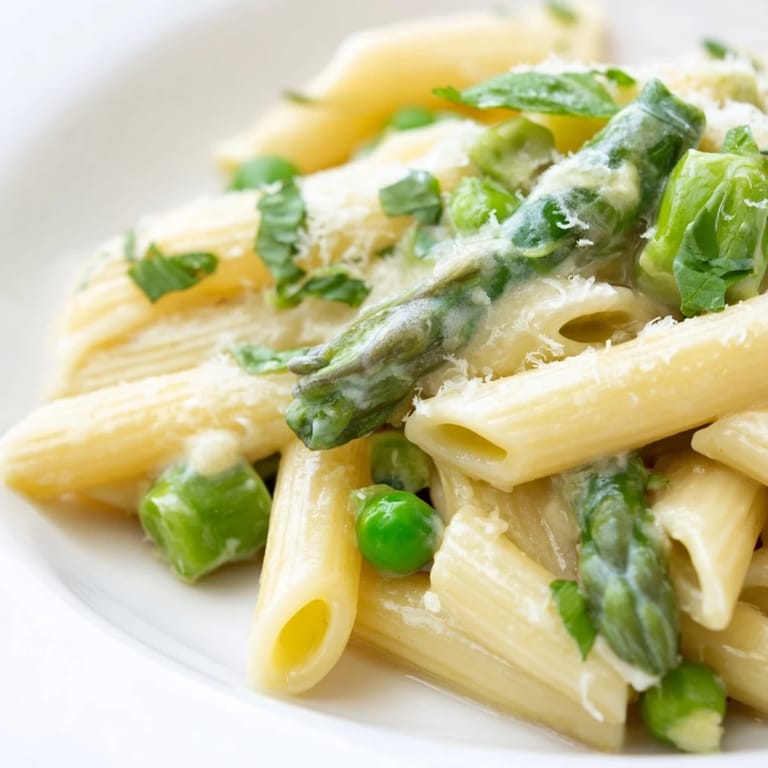
- Divide among bowls and top with extra Parmesan and a handful of chopped basil or parsley. Serve it hot, right away.
 Save
Save The first time I served this, someone said it tasted like eating in a garden, which made me laugh but also felt right. It's one of those meals that doesn't announce itself but somehow makes everyone at the table a little happier. I think it's the lemon, or maybe just the fact that everything is green and alive.
Making It Your Own
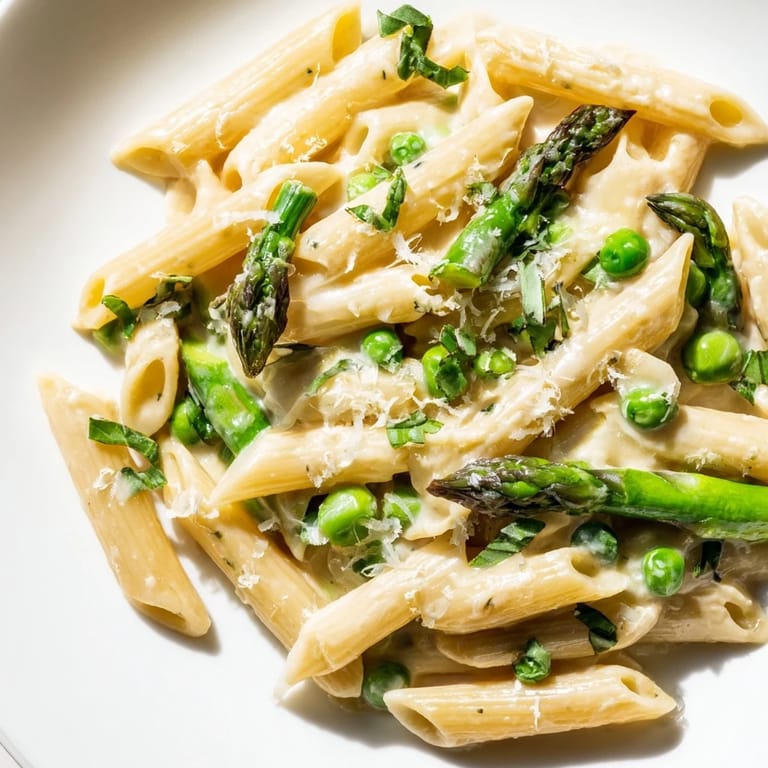
You can swap half-and-half for the heavy cream if you want something lighter, though the sauce won't be quite as luxurious. A pinch of red pepper flakes adds a gentle warmth that plays nicely with the garlic. If you're leaning into fiber, use whole wheat penne, it holds up just as well and adds a nutty undertone.
What You'll Need to Get Started
This comes together with basic tools: a large pot for the pasta, a large skillet for everything else, a colander, and a grater for the Parmesan and lemon zest. A sharp chef's knife and a cutting board make the vegetable prep quick and painless. Nothing fancy, just the essentials that live in most kitchens already.
Things Worth Knowing
This dish contains milk and wheat, so it's not suitable for anyone avoiding gluten or lactose unless you make some swaps. For a vegan version, use plant-based cream and vegan Parmesan, and the flavor stays surprisingly close to the original. Each serving comes in around 480 calories with 17 grams of protein and 65 grams of carbs, which feels satisfying without being too heavy.
- If your vegetables are different sizes, add the thicker ones first and give them a head start.
- Taste before serving because the saltiness can vary a lot depending on your broth and cheese.
- Leftovers reheat well with a splash of milk or broth to loosen the sauce back up.
 Save
Save This is the kind of meal that reminds you why cooking at home matters, not because it's complicated, but because it isn't. It's just good food that tastes like spring, made with your own hands.
Recipe Questions & Answers
- → Can I use frozen vegetables instead of fresh?
Yes, frozen vegetables work well and are convenient. Use the same quantities and add them directly to the skillet. They may cook slightly faster, so reduce the sauté time by 1-2 minutes to keep them tender-crisp.
- → How do I prevent the cream sauce from breaking?
Keep the heat low when adding cream and cheese. Stir gently and continuously until the cheese fully melts. Reserve pasta water to adjust the sauce consistency—it helps stabilize the sauce and prevents it from becoming too thick.
- → What pasta shapes work best for this dish?
Penne is ideal because its ridged surface and hollow center capture the creamy sauce beautifully. Fusilli, farfalle, or rigatoni are equally delicious alternatives that hold sauce well.
- → Can I make this dairy-free?
Absolutely. Substitute heavy cream with plant-based alternatives like oat or coconut cream, and use dairy-free Parmesan. The dish works wonderfully vegan and tastes just as rich and satisfying.
- → How should I store and reheat leftovers?
Store in an airtight container for up to 3 days. Reheat gently on the stovetop over low heat, stirring occasionally and adding a splash of pasta water or vegetable broth to restore the creamy consistency.
- → Can I add protein to make it heartier?
Yes. Grilled chicken, shrimp, or crispy pancetta complement this dish beautifully. Add cooked protein during the final tossing step. You can also stir in white beans or chickpeas for a vegetarian protein boost.