 Save
Save My first spanakopita came together almost by accident on a rainy Athens afternoon when my friend Maria insisted I learn her grandmother's recipe before I left Greece. She handed me a crumpled piece of paper with barely legible scribbles and a knowing smile, saying the real secret was in how the phyllo felt under your fingers, not the instructions. That lesson stuck with me more than any measurement ever could, and now whenever I make this pie, I remember her standing beside the stove, correcting my layering technique with gentle patience and the smell of dill filling the entire kitchen.
I served this spanakopita at a potluck once when everything else I'd made that week had gone wrong, and somehow this dish became the thing people asked me to bring back. A colleague told me it reminded her of visiting Crete with her parents thirty years ago, and suddenly we were both lost in that kind of conversation that happens over food, where a bite of something brings back an entire summer you'd nearly forgotten.
Ingredients
- Fresh spinach, 2 lbs (or 1 lb frozen, thawed and squeezed dry): The key is removing as much moisture as possible; wet spinach will make your phyllo soggy and disappointingly limp instead of crisp.
- Yellow onion and scallions: These cook down to almost nothing but leave behind a subtle sweetness that balances the sharp tang of feta beautifully.
- Fresh dill and parsley: Fresh herbs make the difference between a good spanakopita and one that tastes alive in your mouth; dried works in a pinch but loses that bright, almost peppery quality.
- Feta cheese, 8 oz crumbled: Don't buy pre-crumbled feta if you can help it; a block that you crumble yourself has better texture and flavor, and it'll mix more evenly with the spinach.
- Ricotta or cottage cheese, optional: This softens the filling and makes it creamy, which some people love and others see as gilding the lily; I add it when I want the pie to feel more indulgent.
- Eggs and warm spices: The eggs bind everything together while nutmeg and black pepper add warmth and depth that keeps the filling from tasting one-dimensional.
- Phyllo dough, 1 lb: This temperamental but magical ingredient needs to come to room temperature before you unfold it, or it'll shatter in your hands like autumn leaves.
- Olive oil or melted butter for brushing: Use whatever tastes right to you, though butter gives a richer color and olive oil keeps things more Mediterranean and lighter.
Tired of Takeout? 🥡
Get 10 meals you can make faster than delivery arrives. Seriously.
One email. No spam. Unsubscribe anytime.
Instructions
- Get your oven ready and set up your workspace:
- Preheat to 350°F and lightly grease a 9x13-inch baking dish; phyllo work goes faster if you have everything within arm's reach before you start unwrapping that delicate dough.
- Soften the aromatics:
- Heat 2 tbsp olive oil and sauté the onion and scallions until they turn translucent and sweet, about 5 minutes; you'll notice the raw onion bite mellows out as they cook.
- Wilt the spinach gently:
- Add your spinach in batches if using fresh, watching it collapse from an enormous pile into something manageable; cook until the liquid mostly evaporates, which takes longer than you'd think but is absolutely worth the patience.
- Build the filling:
- Let the spinach cool completely, then squeeze out every last bit of moisture with your hands or a clean kitchen towel. Combine it in a bowl with dill, parsley, crumbled feta, ricotta if using, beaten eggs, pepper, nutmeg, and salt; taste as you go because the filling should taste slightly salty and alive before it bakes.
- Layer the phyllo base with intention:
- Lay one phyllo sheet in the dish and brush it lightly with oil or butter, repeating with 6-7 more sheets; the brushing is what makes it crisp, so don't skip this step even though it feels tedious. Each sheet should be barely kissed with fat, not drenched.
- Spread the filling evenly:
- This is where you get to be generous because spanakopita is meant to be hearty and satisfying, filled all the way to the corners.
- Top with more phyllo layers:
- Layer and brush the remaining sheets just as you did the base, tucking the overhang edges down into the dish so everything stays neat as it bakes.
- Score the top before baking:
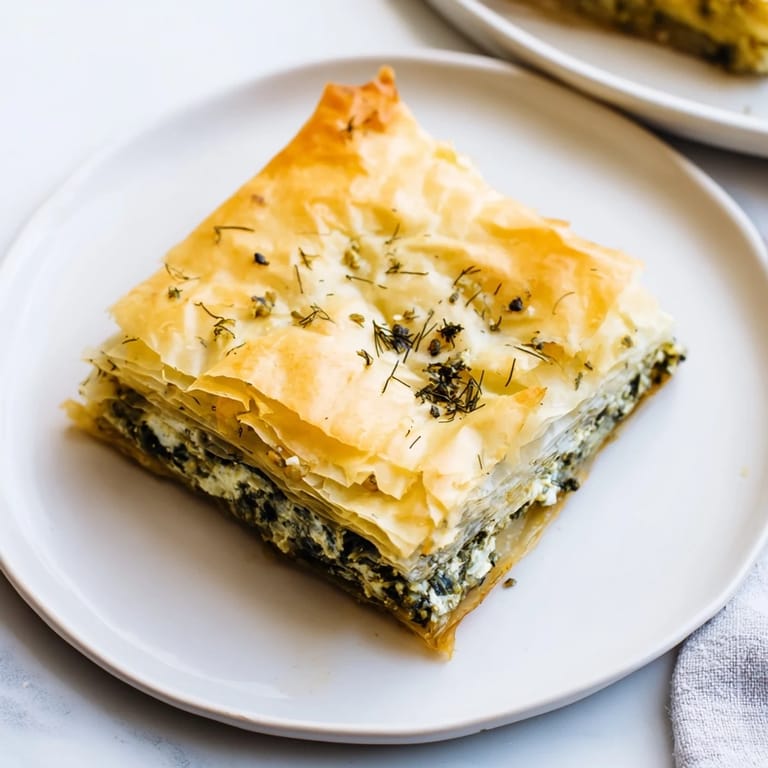
- Using a sharp knife, cut gentle squares or diamonds into the top layers only, not all the way through; this makes serving easier and looks intentional when it emerges golden from the oven.
- Bake until golden and crackling:
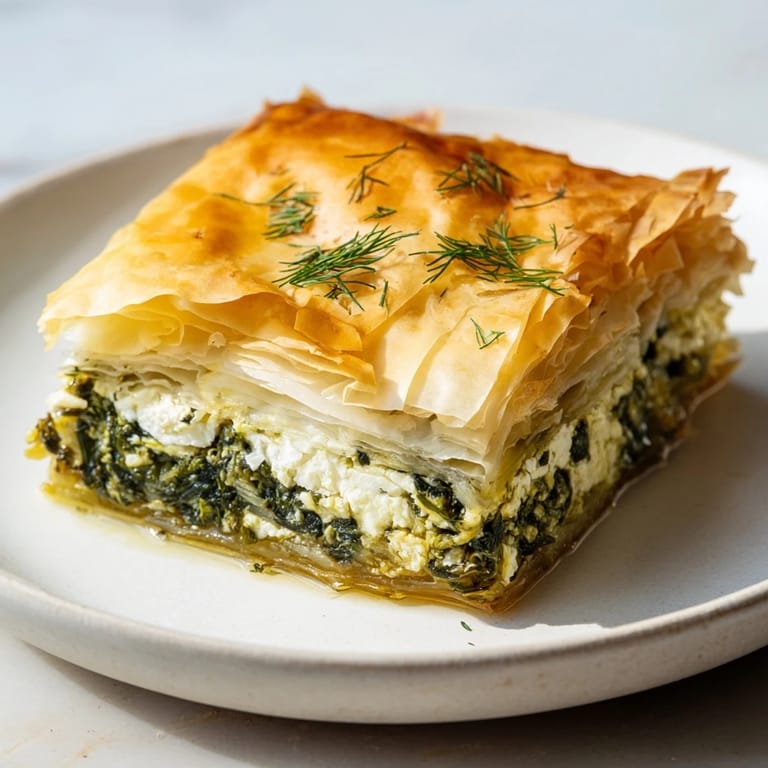
- 35-40 minutes should give you a top that sounds crispy when you tap it and smells like every good thing that ever happened in a Greek kitchen.
 Save
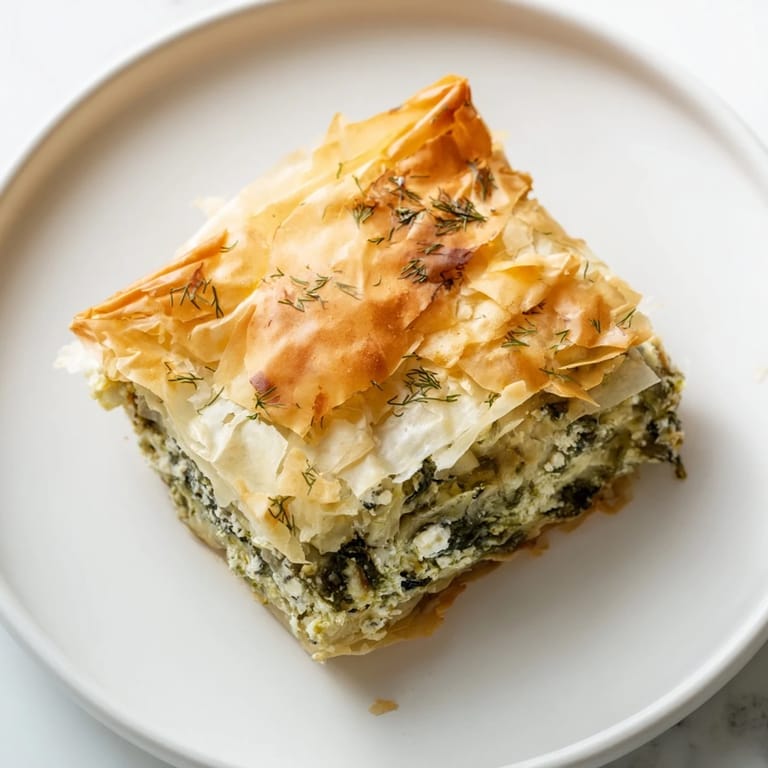
Save There's a particular magic that happens when you pull spanakopita from the oven and the kitchen fills with that sound of phyllo crackling as it cools, a gentle reminder that this simple combination of vegetables and pastry became something extraordinary just by paying attention to the details. It's the kind of dish that makes people slow down and actually taste their food, which in this hurried world feels like its own small miracle.
The Phyllo Philosophy
Phyllo dough seems designed to humiliate home cooks, and your first time working with it will probably involve some tears, some sticking, and possibly some quiet cursing. But here's the thing: phyllo is actually forgiving in the final bake because even the torn pieces crisp up beautifully, and all those little imperfections create extra crackling edges that are honestly the best part. Stop trying to handle it like precious silk and start treating it like what it is, a resilient dough that's been made this way for centuries because it works.
The Filling Game
The spinach and feta combination feels simple until you taste how the salty cheese plays against the mild green vegetables, how the dill brings everything into focus, and how the nutmeg adds this almost imperceptible warmth that makes people pause and try to figure out what they're tasting. The secret is balance; too much salt and it's harsh, too little and it tastes wan and forgettable. This is where tasting as you go becomes non-negotiable, where you learn your own preferences, and where you realize cooking is actually just a series of small decisions made with intention.
Serving and Storing
Spanakopita tastes best served warm or at room temperature, never straight from the fridge where the phyllo hardens and loses its magic. It keeps beautifully for several days and actually tastes better the next day as flavors deepen, though the phyllo will lose some of its crispness unless you reheat it gently in a low oven for about 10 minutes. Make this dish with a crisp white wine like Assyrtiko in your glass, or a simple Greek salad alongside, or honestly just eat it by itself because sometimes the best meals are the ones that need nothing else.
- Let it cool for at least 10 minutes after baking so the structure sets and you can actually cut clean squares instead of everything falling apart.
- Serve it warm for maximum phyllo crispness, though room temperature is perfectly lovely and actually easier for feeding a crowd.
- Freeze unbaked spanakopita on a tray before wrapping it, so you can bake it straight from frozen if life gets in the way of your plans.
 Save
Save Making spanakopita is less about following rules and more about understanding how simple ingredients transform when treated with respect and attention. Every time you make this pie, you're adding your own small story to a recipe that's been made the same way in Greek kitchens for generations, which somehow makes your kitchen feel connected to something larger and older and more beautiful than yourself.
Recipe Questions & Answers
- → What type of greens can I use besides spinach?
You can substitute chard or a mixed variety of leafy greens for a different flavor and texture while maintaining the dish's integrity.
- → How do I prevent the phyllo pastry from drying out?
Keep the phyllo sheets covered with a damp cloth while working and brush each layer generously with olive oil or melted butter for moisture and crispness.
- → Can I prepare the filling in advance?
Yes, preparing the filling ahead saves time; just cool it completely and store it chilled before assembling.
- → What is the best way to drain excess moisture from the spinach?
After cooking, squeeze the spinach tightly in a clean kitchen towel or press in a fine sieve to remove as much liquid as possible to avoid soggy pastry.
- → How should I serve the baked pie?
Allow the pie to cool slightly to set the filling, then cut into squares or diamonds and serve warm as an appetizer or light main.