 Save
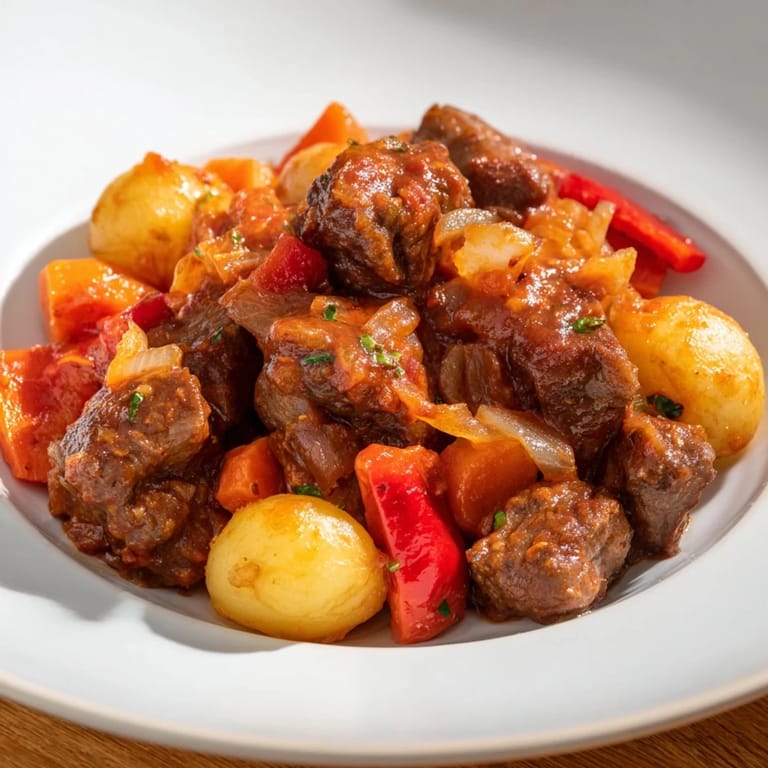
Save My first real Hungarian goulash came together on a cold Budapest evening when a neighbor insisted the key wasn't just the paprika—it was patience and the right pot. She taught me how the caramelized onions and slow simmer transform tough beef into something that falls apart at the gentlest nudge of a wooden spoon. That night, the aroma alone convinced three friends to stay for dinner. Now whenever I make it, I'm transported back to that cramped kitchen where everyone stood shoulder-to-shoulder, waiting for that first steaming bowl.
I learned the power of this dish one gray February when I doubled the recipe for a potluck and watched people actually slow down mid-conversation to focus on eating. The way the stew coated a spoon told me the slow cooking had done its job—the vegetables had surrendered their edges, the broth had turned silky from the beef's collagen, and the whole pot smelled like comfort itself.
Ingredients
- Beef chuck, cut into 1-inch cubes: This cut has enough marbling to stay moist through two hours of simmering; it breaks down into those tender pieces that make goulash worth the wait.
- Onions, finely chopped: They're your flavor foundation—caramelize them slowly until deep gold, and they become almost sweet against the paprika.
- Hungarian sweet paprika: Don't skip the Hungarian kind; the real stuff has a roundness that standard paprika can't touch, and it deserves to bloom in hot oil for a minute before the broth goes in.
- Caraway seeds: A single teaspoon adds an earthy whisper that feels authentic without overwhelming; this is the secret many recipes leave out.
- Beef broth, tomato paste, garlic, carrots, red bell pepper, marjoram, potatoes, salt, black pepper, bay leaf: Each plays its part—the broth carries heat, the tomato paste adds depth, the peppers bring sweetness, and the potatoes make it a full meal.
Tired of Takeout? 🥡
Get 10 meals you can make faster than delivery arrives. Seriously.
One email. No spam. Unsubscribe anytime.
Instructions
- Sauté the foundation:
- Heat oil or lard in a heavy pot and add your chopped onions, stirring occasionally until they turn golden and soft around the edges—this takes about eight minutes and smells like something good is about to happen. Don't rush this step; those caramelized onions are doing the heavy lifting for flavor.
- Wake up the garlic:
- Toss in minced garlic and let it cook for just one minute until the raw edge softens and fills the whole kitchen with that sharp, welcoming aroma.
- Brown the beef:
- Add your beef cubes in a single layer if your pot allows, letting them sit undisturbed for a couple of minutes before stirring—this creates a flavorful crust that adds depth to the whole stew. Work in batches if needed rather than crowding the pan.
- Bloom the paprika:
- Sprinkle the three tablespoons of Hungarian paprika directly over the meat and onions, then stir quickly and constantly for about thirty seconds—you want it to toast slightly in the heat without burning, which would make it bitter. This brief moment transforms the paprika from raw spice into something mellow and complex.
- Build the flavor layers:
- Stir in tomato paste, caraway seeds, marjoram, black pepper, and salt, making sure everything is well combined and the tomato paste coats the meat. Each ingredient adds its own dimension—the marjoram brings herbal notes, the caraway contributes earthy warmth, and the tomato paste adds a subtle sweetness.
- Add vegetables and broth:
- Toss in carrots, bell pepper, and the bay leaf, then pour in the beef broth while scraping the bottom of the pot with your spoon to release all those browned, flavorful bits. Bring everything to a gentle simmer; you're looking for small, quiet bubbles, not a rolling boil.
- First long simmer:
- Cover the pot and reduce heat to low, letting it bubble gently for one hour while you stir occasionally—the beef is still firming up, and the flavors are just beginning to marry. You'll notice the broth turning deeper and more rich as you stir.
- Add potatoes and finish:
- If using potatoes, add them now and simmer uncovered for another forty-five to sixty minutes—uncovered so the broth thickens slightly and the potatoes absorb all that paprika-forward flavor. The beef should shred easily with just a gentle push of your spoon when it's ready.
- Taste and adjust:
- Remove the bay leaf, then taste and add more salt or paprika if needed; goulash is forgiving and invites you to make it your own. Trust your palate here.
 Save
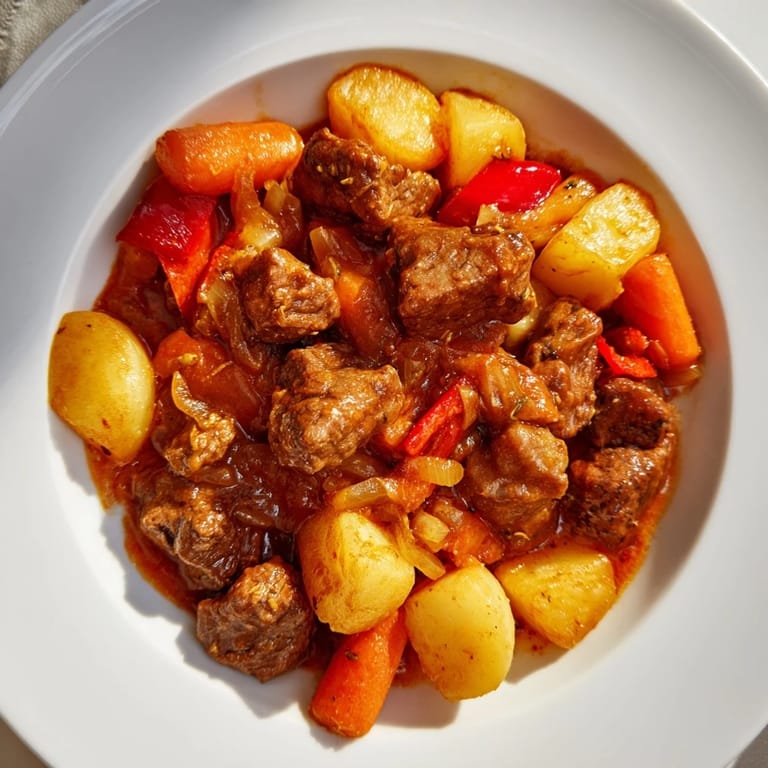
Save There's a moment about an hour in—when you lift the lid and the steam hits your face, carrying that deep paprika scent—where you know you've made something worth the wait. I remember my daughter wandering into the kitchen at that exact point and declaring she wanted nothing else for dinner, which felt like a small victory.
The Paprika Question
Hungarian goulash lives and dies by its paprika, and I've learned this the hard way by testing everything from grocery store tins to specialty imports. The real Hungarian stuff has a natural sweetness and depth that makes the beef taste richer than it should, while standard paprika feels flat and one-dimensional by comparison. If you're serious about this dish, seek out Hungarian paprika specifically—your local spice shop, European markets, or online retailers that actually care about freshness make all the difference.
Timing and Temperature Control
The two-hour cook time is genuinely important, not just a suggestion—beef chuck needs sustained, gentle heat to transform from chewy to tender, and rushing it with high heat only toughens the meat further. I've watched home cooks try to speed this up and end up with sad, stringy beef in murky broth. The magic happens between 180 and 200 degrees Fahrenheit in your pot, where collagen slowly converts to gelatin without the meat tightening up, and the vegetables soften without becoming mush.
Making It Your Own
Once you've made this recipe a few times and understand the bones of it, goulash becomes a canvas for your preferences and what you have on hand. Some versions add a tablespoon of sour cream at the end (though traditionally it's served on the side), while others skip the potatoes entirely and serve the stew over noodles or with crusty bread. The caraway seeds and marjoram are what mark it as authentically Hungarian, so keep those, but the rest invites gentle modification.
- For heat, add a pinch of hot paprika or a minced fresh chili when you bloom the spices—it should warm the broth rather than scald it.
- Leftovers taste noticeably better after a night in the refrigerator when the flavors have settled and deepened.
- This stew freezes beautifully for up to three months, so make extra and save yourself a cooking day later.
 Save
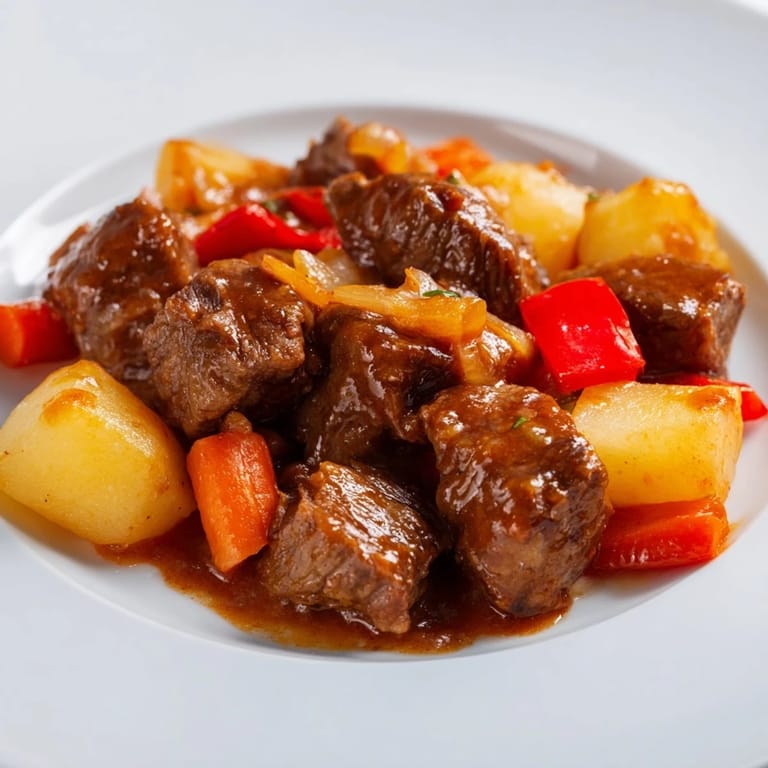
Save This goulash has become my go-to when I want to feed people something substantial that also feels like an embrace in a bowl. It asks only for time and attention, and it repays you with comfort that lingers long after the last spoonful.
Recipe Questions & Answers
- → What cut of beef works best for this stew?
Beef chuck cut into 1-inch cubes is ideal due to its marbling, which breaks down during slow cooking creating tender, flavorful meat.
- → Can I adjust the spiciness of the stew?
Yes, adding a pinch of hot paprika or chopped chili peppers will give the stew a spicier kick while maintaining its traditional profile.
- → What vegetables complement the stew's flavor?
Onions, carrots, red bell pepper, and optional potatoes add sweetness and texture that balance the smoky paprika and hearty beef.
- → How long should the stew simmer for best results?
Simmer the stew gently for about two hours, ensuring the beef becomes tender and the flavors meld perfectly without drying out.
- → What are suggested side dishes to serve with this stew?
Traditional accompaniments include rustic bread, egg noodles, or Hungarian csipetke dumplings to soak up the flavorful sauce.