 Save
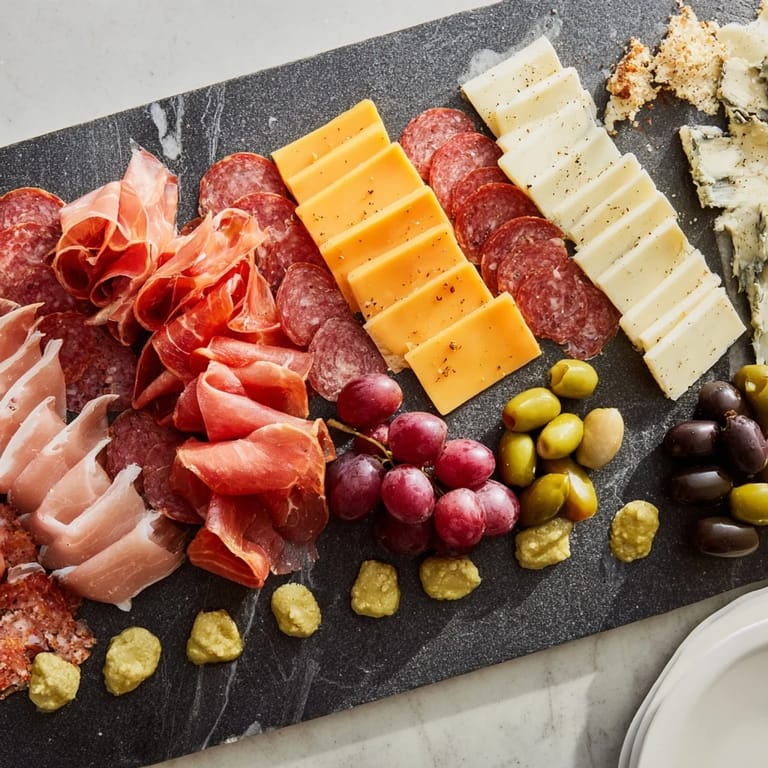
Save I discovered the power of negative space in food while standing in a gallery one afternoon, watching how a single brushstroke could command more attention than a crowded canvas. That moment stuck with me, and months later, I found myself pulling out a rough slate tile from the garden, wondering if the same principle could work on a dinner table. The Industrial Slate was born from that silly experiment—a charcuterie board that stops trying so hard, where restraint becomes the main ingredient. What started as an attempt to impress actually just made everyone pause and look.
The first time I made this for my sister's book club, someone actually set down their wine glass mid-sip and just stared at the board for a solid minute. No one touched it for ten minutes—they were too busy photographing. When they finally did eat, the conversation shifted from casual chatting to real discussions about the sharpness of that aged cheddar, the subtle funk of the blue cheese, how the soppressata tasted better in this context somehow. It turned into proof that presentation isn't shallow; sometimes it's an invitation to actually pay attention.
Ingredients
- Smoked Prosciutto (100 g): Paper-thin and delicate, it curls slightly when you unfold it—buy it sliced fresh from the counter rather than pre-packaged if you can, it makes a real difference in how it sits on the slate.
- Soppressata (100 g): The peppery snap of this Italian salami cuts through richness better than milder cured meats, and its deep red color anchors one end of your arrangement.
- Coppa (100 g): Marbled with fat and silky on the tongue, coppa bridges the gap between soppressata's spice and prosciutto's delicacy—it's the diplomat of your meat selection.
- Mortadella (100 g): Often overlooked, but its subtle spice and tender texture add complexity that rounds out the cold meat lineup beautifully.
- Aged Cheddar, sliced (100 g): The sharpness should make your eyes water slightly; it's what gives this board its backbone and cuts through the salt of the cured meats.
- Manchego, sliced (100 g): Nutty and firm, this Spanish cheese adds a golden warmth that plays nicely against the brighter blue cheese waiting nearby.
- Gruyère, sliced (100 g): Sweet and slightly crystally when aged, it's the bridge between savory and indulgent, the cheese people reach for twice.
- Blue Cheese, sliced or crumbled (100 g): Its boldness demands respect—it should taste almost aggressive, a small amount creating huge flavor impact across the whole board.
- Seedless Red Grapes (1 small bunch): Their sweetness and gentle acidity reset your palate between bites of salty meat and pungent cheese, which is why they're not optional.
- Cornichons (50 g): These tiny pickles deliver a sharp vinegar punch that clarifies your taste buds and makes you want another bite of everything else.
- Whole Grain Mustard (50 g): The seeds should still be visible and intact; it adds texture and a horseradish-like warmth that complements cured meats perfectly.
- Mixed Olives (50 g): The contrast between briny green and meaty black olives gives you options depending on your mood with each bite.
- Freshly Cracked Black Pepper: Grind it just before arranging so it hasn't lost its volatile oils; it adds aroma as much as taste.
Tired of Takeout? 🥡
Get 10 meals you can make faster than delivery arrives. Seriously.
One email. No spam. Unsubscribe anytime.
Instructions
- Start with Your Canvas:
- Place your heavy stone slab on the table and take a breath—this is where the magic happens. If you have time, chill the slate in the freezer for twenty minutes beforehand so everything stays crisp and cool longer.
- Build Your Meat Lines:
- Lay down your cold meats in four parallel lines, keeping each type separate and slightly overlapping like roof shingles for that clean visual. Let each meat's color tell its own story without mixing.
- Create Your Cheese Counterpoint:
- Mirror the meats with your cheeses on the opposite side, slicing them consistently and arranging them with the same precision. The contrast between the cool yellow of Manchego and the deep veining of blue cheese should feel intentional.
- Fill the Spaces Thoughtfully:
- Nestle small grape clusters, cornichons, and olives into the negative space between meats and cheeses, creating little pockets of color and texture. Think of these as punctuation marks in a sentence, not filler.
- Add Your Condiments:
- Spread whole grain mustard in a thin line or place it in a small bowl at the corner of the slate—it should look like a design choice, not an afterthought. This small detail changes how people approach the board.
- Finish with Pepper:
- Give everything a final shower of freshly cracked black pepper, focusing on the meats where its aroma will be most noticed. This last step adds dimension and signals that you care about the details.
- Step Back and Serve:
- Leave it untouched for thirty seconds while people absorb the arrangement, then let them dive in. The moment someone says something about the presentation is when you know you nailed it.
 Save
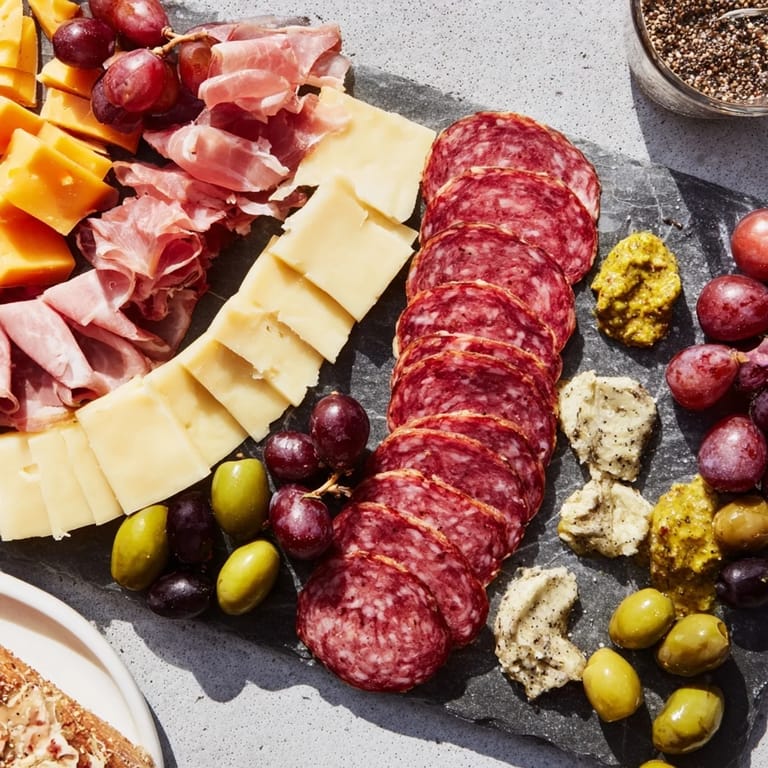
Save What surprised me most wasn't how easy this was to make, but how it changed the dynamic of eating. Without a plate in front of you, without structured bites, something shifts—people actually taste things, they talk more, they slow down. That's when I realized this appetizer wasn't about showing off technique or spending hours in the kitchen; it was about creating a moment where people could just be present together.
The Art of Arrangement
Geometry on a plate might sound sterile, but it's actually quite liberating. The straight lines aren't about perfection; they're about clarity, giving each ingredient room to exist without competing for attention. I learned this the hard way after my first attempt turned into a jumbled mess that looked like I'd thrown everything at the slate and hoped for the best. Once I committed to the lines, everything suddenly made sense—the eye knows where to look, the hands know what to reach for, and somehow the food tastes better when you can see exactly what you're choosing.
Temperature and Timing
The window between arranging and serving matters more than you'd think. I once made this board thirty minutes early for a dinner party, thinking I was being efficient, and by the time guests arrived, everything had warmed up slightly and the cheeses had lost their firm snap. Now I work backwards from when people will actually eat—assembling just fifteen minutes before, keeping the board in a cool spot until the last moment. The cold slate itself becomes your ally, keeping everything chilled longer than you'd expect, which is why that chill in the freezer beforehand is worth it.
Why Restraint Wins
There's a quiet confidence in knowing when to stop. A crowded charcuterie board shouts for attention; this one whispers and somehow everyone listens harder. The beauty lives in what you leave out as much as what you put in, in the space between the lines as much as the lines themselves. Each ingredient earns its place by virtue of flavor, color, and how it contributes to the whole composition.
- Less is more, but make sure every single ingredient tastes exceptional because there's nowhere to hide on an empty slate.
- Consider the seasons when choosing your cheeses and meats—what you crave in summer tastes different in winter.
- Never apologize for simplicity; if someone wants more, they can add it themselves.
 Save
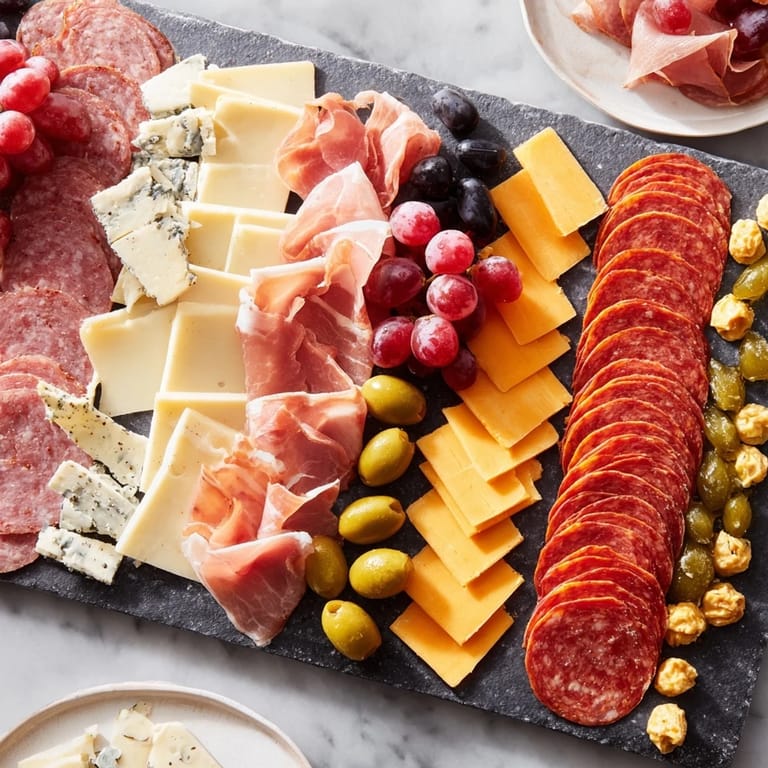
Save This board taught me that sometimes the most memorable meals aren't about complexity or hours spent cooking. They're about intention, presentation, and creating a reason for people to pause and actually experience what's in front of them.
Recipe Questions & Answers
- → What is the best type of slate to use for this platter?
Use a heavy, unpolished stone or slate board that can hold the weight of meats and cheeses while providing a rustic surface.
- → Can the arrangement be prepared ahead of time?
For best freshness, arrange just before serving, but chilling the slate beforehand can help keep ingredients cold longer.
- → What cheeses pair well with the cold meats?
Aged cheddar, Manchego, Gruyère, and blue cheese offer sharp contrasts that complement the smoked and cured meats on the slate.
- → Are there vegetarian adaptations for this platter?
Yes, omit the meats and add marinated artichoke hearts and roasted nuts for texture and flavor variety.
- → What accompaniments enhance the flavor experience?
Seedless red grapes, cornichons, mixed olives, and whole grain mustard add sweet, tangy, and briny notes that balance the meats and cheeses.
- → How should the platter be seasoned?
Finish with a light sprinkle of freshly cracked black pepper over meats and cheeses to elevate aroma and taste.