 Save
Save My grandmother's kitchen in Warsaw always smelled like butter and caramelized onions when she made pierogi. I was maybe eight, standing on a step stool watching her fold the dough with such practiced ease that her hands seemed to move by memory alone. Years later, when I finally tried making them myself, I realized those weren't just dumplings—they were her way of showing us we were worth the time. Now I make them the same way, and something about boiling and frying them brings back that exact warmth.
I made a double batch for a potluck last winter and watched them disappear in minutes—faster than I could plate them with the caramelized onions and sour cream. One of my friends actually asked for the recipe that night, which honestly felt like the highest compliment. That's when I knew these weren't just something I loved to eat; they were worth sharing.
Ingredients
- All-purpose flour (3 cups): The foundation of your dough; it needs to be sturdy enough to hold the filling without tearing, which is why kneading matters more than you'd think.
- Egg and sour cream: These make the dough tender and forgiving, so don't skip them even if you're tempted.
- Lukewarm water (¾ cup): Temperature matters here—cold water makes the dough tough, hot water breaks the egg before it can incorporate properly.
- Russet potatoes (1½ lbs): Their starchy texture creates that smooth, creamy filling when mashed; waxy potatoes will fall apart and leave you with something grainy.
- Farmers cheese or ricotta: This is the secret to richness without heaviness; if you can't find farmers cheese, make sure your ricotta is drained well or the filling becomes wet.
- Sharp cheddar (½ cup): It adds bite and depth that plain white cheese misses; don't use mild cheddar unless you want the filling to taste like nothing.
- Butter (for dough, filling, and serving): Good butter changes everything here—it's in your dough, your filling, your caramelized onions, and what you pan-fry with, so use something you'd actually eat on toast.
Tired of Takeout? 🥡
Get 10 meals you can make faster than delivery arrives. Seriously.
One email. No spam. Unsubscribe anytime.
Instructions
- Mix and knead the dough:
- Combine your dry ingredients, make a well like you mean it, and watch as you slowly bring the flour into the wet ingredients. Knead for 5 to 7 minutes until the dough feels smooth and elastic beneath your hands, not sticky or stiff. Let it rest under a damp towel—this 30 minutes transforms it from rough to workable.
- Boil and season the potatoes:
- Cut them small so they cook evenly and won't leave hard bits in your filling. Drain them really well; any excess water is the enemy of a good filling, so don't just drain them—let them sit for a minute to release steam.
- Toast the onions for the filling:
- Golden onions stirred into the filling add sweetness and depth that plain mashed potatoes can't provide on their own. Let them cool before mixing with the cheese so they don't make everything warm and wet.
- Combine and taste the filling:
- Mix potatoes, sautéed onion, both cheeses together and season generously—remember this will be cold when you eat it, so it needs more salt than you think. Let it cool completely before filling.
- Roll and cut the dough:
- Aim for about ⅛-inch thickness; thinner dough is easier to seal and more tender when cooked. Use a 3-inch round cutter or even a glass, and work with one portion at a time while the rest stays covered.
- Fill and fold carefully:
- A heaping teaspoon per dumpling is the sweet spot—too much filling and they burst, too little and they taste hollow. Pinch the edges firmly, folding them in a half-moon, and then place them under a towel so they don't dry out.
- Boil until they float, then one minute more:
- This is the critical part; pierogi that float for only a second might have a raw spot in the middle. Once they float, give them one more minute and they're done.
- Pan-fry in batches to golden:
- Don't crowd the skillet or they'll steam instead of fry. Watch for the bottom to turn golden and crispy before flipping, which takes about 2 to 3 minutes.
- Slowly caramelize the onions:
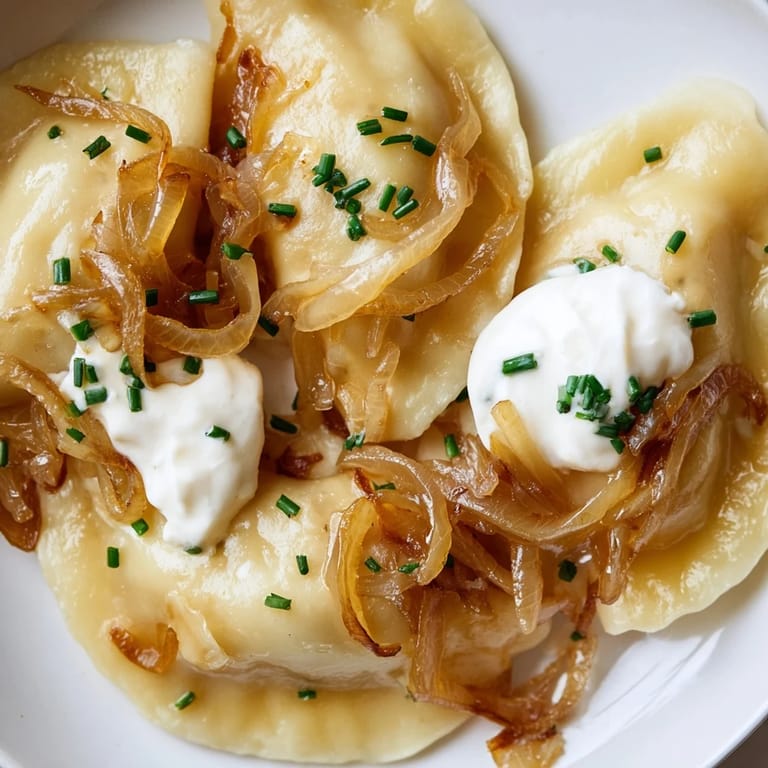
- This step requires patience and a medium-low heat; rustle them through the butter often and let them turn golden over 20 to 25 minutes. Rushed caramelized onions taste sharp instead of sweet.
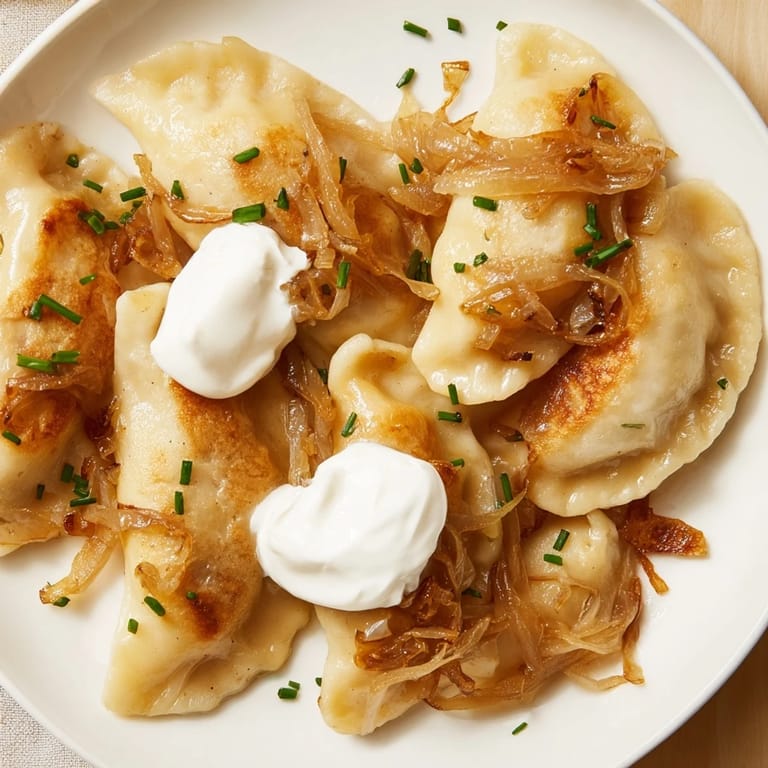
- Serve hot with toppings:
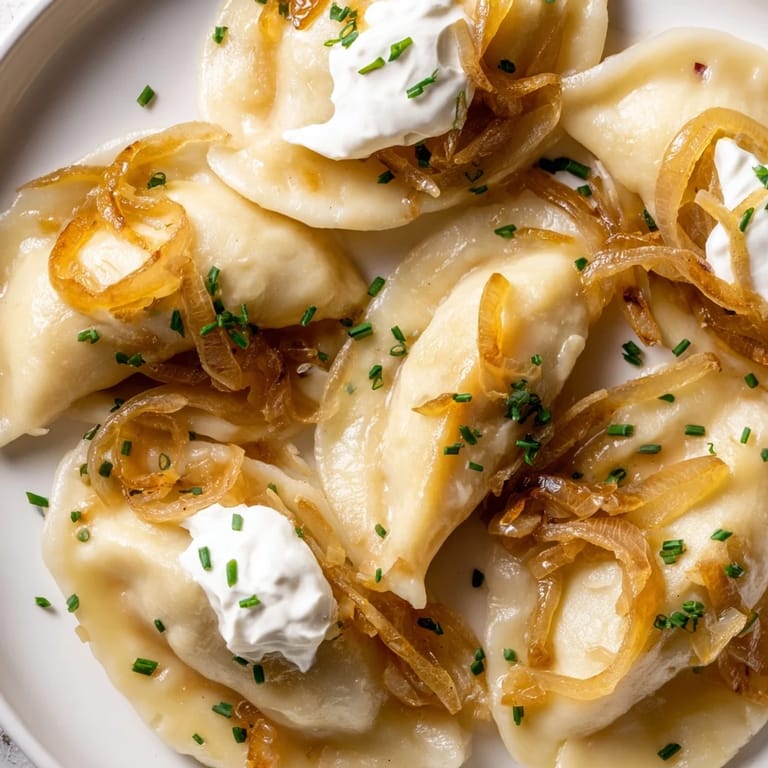
- A dollop of cool sour cream against hot crispy pierogi is honestly the best part. Chives or parsley on top is just decoration.
 Save
Save One of my best food memories is eating these at midnight after a long day, sitting in my kitchen with the smell of caramelized onions still hanging in the air, and realizing that simple food cooked with care tastes like someone loves you. That's what these pierogi are.
Why These Dumplings Matter
Pierogi are a lot more than just filled dough—they're a connection to people and places and kitchens where time moves differently. Every fold and boil is a small decision that changes the texture or taste, and paying attention to those decisions is how you stop following a recipe and start cooking something that tastes like home. They're Polish in the way that matters most, which is that they're humble and generous and designed to feed people you care about.
Make-Ahead and Freezing
Uncooked pierogi freeze beautifully, which means you can make a whole batch on a quiet Sunday and have homemade dumplings waiting in your freezer for moments when you want something real but don't have hours to spend cooking. Boil them straight from frozen, adding a minute or two to the cooking time since they're coming from cold. I've kept them frozen for two months without any loss of quality, though I've never actually managed to stretch them that long because someone always finds them and gets excited about eating them.
Variations Worth Trying
Once you get comfortable with the basic potato and cheese version, the dough is forgiving enough for other fillings—sauerkraut and mushroom is traditional and deeply satisfying, or you can swap the cheese filling entirely and go savory or even sweet. The caramelized onions work with all of them, though some people skip the onions and go straight to crispy bacon if they're making a non-vegetarian batch. The structure stays the same; it's just about respecting what you're putting inside.
- Try adding a bit of sharp white cheddar to a sauerkraut filling for contrast and depth.
- Bacon lardons fried with the onions turn these into something even richer if you're no longer keeping them vegetarian.
- A swirl of chive butter instead of plain butter while pan-frying adds green notes without changing the method.
 Save
Save Making pierogi is an act of care, whether you're cooking for yourself or feeding a table of people who are waiting with their forks ready. That's the recipe worth keeping.
Recipe Questions & Answers
- → What type of cheese works best for the filling?
Farmers cheese or well-drained ricotta combined with sharp cheddar gives a creamy and slightly tangy flavor ideal for the filling.
- → How should the dough be prepared for pierogi?
The dough is mixed with flour, egg, sour cream, salt, melted butter, and lukewarm water, then kneaded until smooth and elastic before resting for 30 minutes.
- → What’s the best way to cook the pierogi initially?
Boil the pierogi in salted water until they float, then cook for an additional 1-2 minutes to ensure the filling is hot.
- → How do I achieve crispy pierogi edges?
After boiling, pan-fry the pierogi in butter on medium heat until both sides are golden and crisp, about 2-3 minutes per side.
- → How are the onions prepared for serving?
Thinly sliced onions are slowly caramelized in butter over medium-low heat until deeply golden and sweet, which adds a rich topping.
- → Can these dumplings be frozen?
Yes, uncooked pierogi can be frozen on a tray before transferring to bags and stored for up to 2 months.