 Save
Save My grandmother's kitchen smelled like nutmeg and beef broth every winter, and pelmeni were always simmering on her stovetop. I watched her small, practiced hands fold each dumpling with the kind of efficiency that only comes from decades of repetition, never rushing, never fumbling. She'd let me taste the filling raw—something my mother said was unsafe but my grandmother insisted was how you knew if it was right. The first time I made them without her guidance, my dumplings fell apart in the water, but I learned something valuable that day about pressure and patience.
I made these for my roommate on a snowy Thursday when she came home exhausted from work, and the way her face lit up when she tasted them hot with sour cream made me understand why my grandmother spent so many afternoons at that stove. She asked me to make them again the next week, and the week after that, until pelmeni became our thing—the dish that meant I was thinking of her.
Ingredients
- All-purpose flour (2 cups): The foundation of a tender dough—don't skimp on kneading time, as it develops the gluten network that keeps your dumplings intact in boiling water.
- Cold water (1/2 cup) and egg: These bind the dough together; the cold water specifically keeps the dough from becoming sticky, which is why you shouldn't swap it for warm.
- Salt (1/2 tsp for dough): Seasons the dough itself so every bite tastes intentional.
- Ground pork and beef (7 oz each): The two-meat blend gives the filling depth; pork alone feels one-dimensional, but beef alone can be tough.
- Grated onion and minced garlic: The onion breaks down into the filling and releases moisture, which keeps the meat tender as it cooks; garlic adds a whisper of sharpness that doesn't overpower.
- Cold water (2 tbsp) in the filling: This is the secret—it keeps the meat loose and succulent instead of dense and heavy.
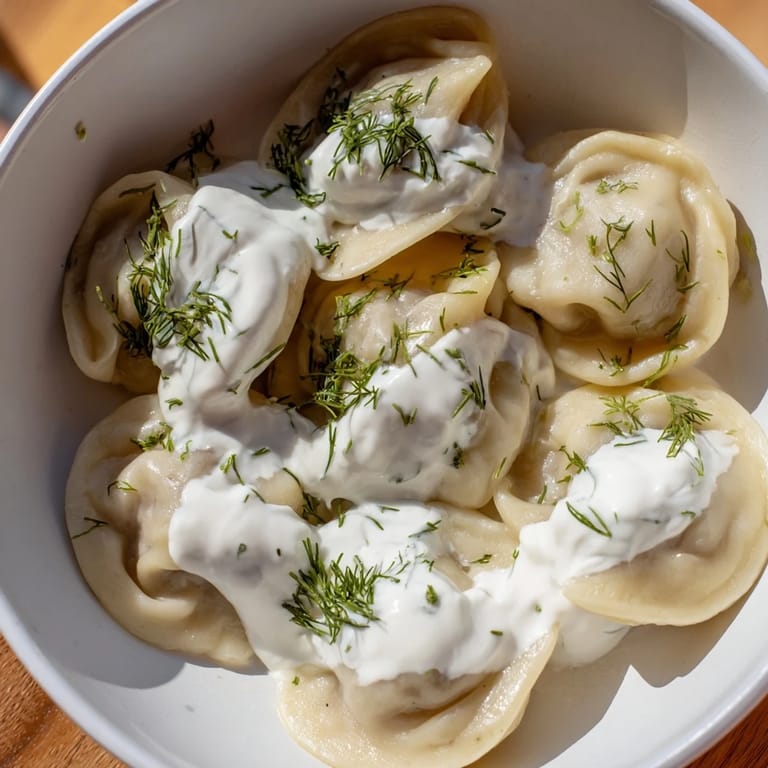
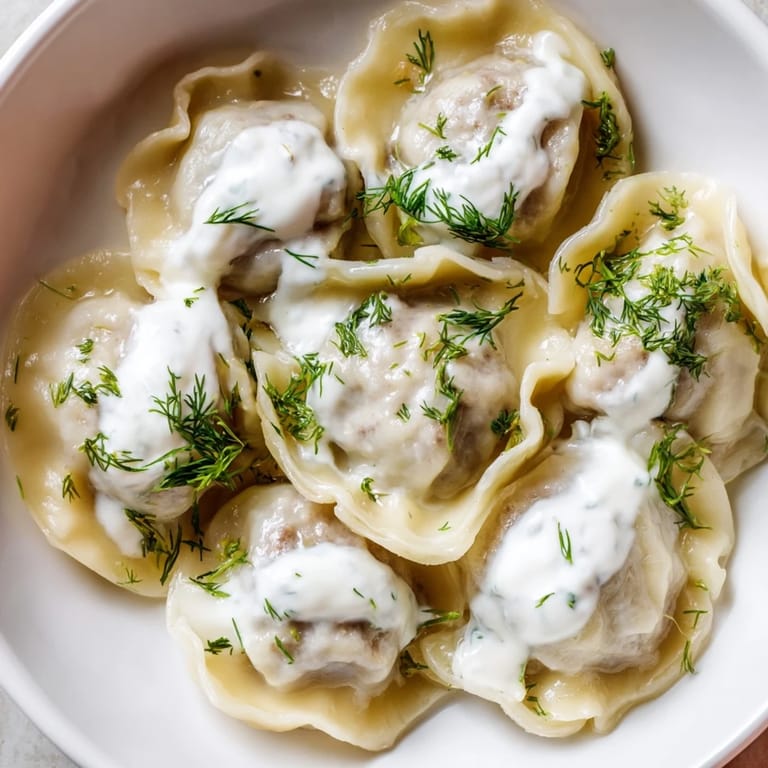
- Sour cream: The cooling, tangy counterbalance to the rich, meaty filling; fresh dill is optional but it brightens everything if you have it.
Tired of Takeout? 🥡
Get 10 meals you can make faster than delivery arrives. Seriously.
One email. No spam. Unsubscribe anytime.
Instructions
- Build your dough carefully:
- Combine flour and salt in a bowl, then add the egg and start bringing the dough together before you add water—this prevents lumps. Knead steadily for 8–10 minutes until the dough feels smooth and elastic, almost silky. Covering it to rest is non-negotiable; the 20 minutes allows the gluten to relax so you can roll it thin without it shrinking back.
- Mix the filling with intention:
- Combine both meats with the grated onion, garlic, salt, pepper, and cold water, stirring until the mixture becomes sticky and holds together. This stickiness is what keeps the pelmeni moist as they cook, so don't worry if it looks wetter than you'd expect.
- Roll thin and cut circles:
- Once the dough has rested, dust your work surface with flour and roll until it's almost translucent—about 2 mm thick. Use a 2.5-inch cutter and work quickly so the dough doesn't dry out; you should get around 40 circles from this amount.
- Fill and fold into shape:
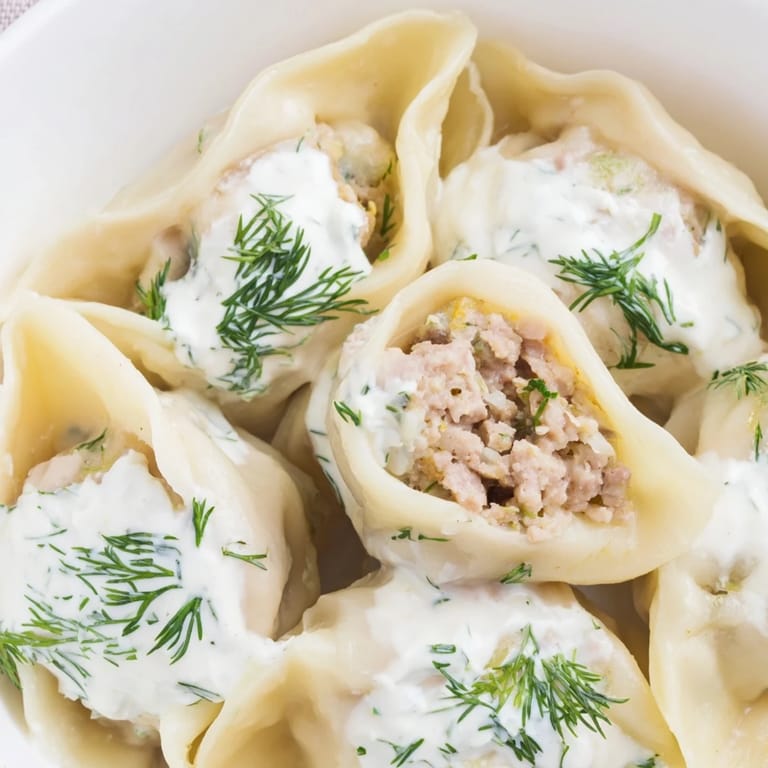
- Place a teaspoon of filling in the center of each circle—not more, or it will burst—then fold into a half-moon and pinch the edges tightly. The final shape comes when you bring the two corners together; it takes practice to make them neat, but even imperfect pelmeni taste delicious.
- Boil until they float:
- Bring salted water to a rolling boil and drop pelmeni in batches, stirring gently so they don't stick to the bottom. They'll sink at first, then float after 5–7 minutes when the filling is fully cooked—that's your signal to fish them out with a slotted spoon.
- Finish and serve hot:
- The pelmeni should go straight from water to bowl while they're steaming, then topped generously with sour cream and a sprinkle of fresh dill. Serve immediately so they stay tender.
 Save
Save I remember the moment my sister took her first bite and closed her eyes—that quiet pause where food stops being just sustenance and becomes a small ceremony of care. Pelmeni gave us back something we didn't know we were missing, a connection to a kitchen we'd never seen but somehow always understood.
The Art of the Fold
The pelmeni shape is deceptively simple but demands a light touch and gentle pressure. Fold too hard and the dough tears; fold too tentatively and the edges won't seal. I've found that the best folders work almost absently, the way someone might fold a piece of paper they've folded a thousand times before. Your hands learn the motion faster than your mind can explain it, so don't overthink the geometry—if the edges are sealed and the pelmeni holds together in boiling water, you've succeeded.
Freezing and Make-Ahead Strategy
One of the greatest gifts of pelmeni is that they freeze brilliantly, which means you can fold them on a quiet Sunday and have them ready for desperate weeknight dinners. Lay them on a parchment-lined tray until they're frozen solid—about 2 hours—then transfer to a bag or container and they'll keep for up to 3 months. The frozen pelmeni actually cook slightly better than fresh ones, as the filling stays more tender and the dough doesn't get overworked. I often make a double batch just for the peace of mind.
Serving and Variations
Sour cream is traditional and essential, but pelmeni are forgiving enough to pair with other finishes depending on your mood or what you have on hand. Some cooks swear by a splash of vinegar or melted butter instead of sour cream, and both are worth trying. A small pinch of nutmeg in the filling—something my grandmother whispered to me years later—transforms the flavor in a way that's subtle but unmistakable, adding warmth without announcing itself.
- Fresh dill isn't optional if you can get it; it lifts the entire dish with its bright, clean taste.
- If you're making these for guests, you can cook the pelmeni an hour ahead and reheat them gently in boiling water just before serving.
- A small bowl of vinegar or melted butter on the side lets people finish their own pelmeni exactly as they prefer.
 Save
Save Making pelmeni is an act of slowing down, of giving your hands something deliberate to do while your mind settles. Once you've made them, you'll find yourself reaching for the recipe on cold evenings, not just for the comfort of the food but for the quiet meditation of the folding.
Recipe Questions & Answers
- → What is the dough made of?
The dough combines all-purpose flour, cold water, an egg, and salt, kneaded until smooth and elastic for a tender texture.
- → How should the filling be prepared?
The filling consists of finely ground pork and beef mixed with grated onion, minced garlic, salt, pepper, and a bit of cold water to bind the ingredients well.
- → How are the dumplings shaped?
Roll out the dough thinly, cut into circles, place a teaspoon of filling in the center, fold in half, and pinch edges tightly to seal the dumplings.
- → What is the best way to cook them?
Boil the dumplings in salted water until they float, usually 5–7 minutes, ensuring the filling is fully cooked while maintaining a tender outer dough.
- → How should they be served?
Serve hot, generously topped with rich sour cream and optionally sprinkled with fresh dill for added flavor and freshness.
- → Can these dumplings be stored or frozen?
Yes, you can freeze uncooked dumplings on a tray before transferring them to a bag, preserving them for up to three months without loss of quality.