 Save
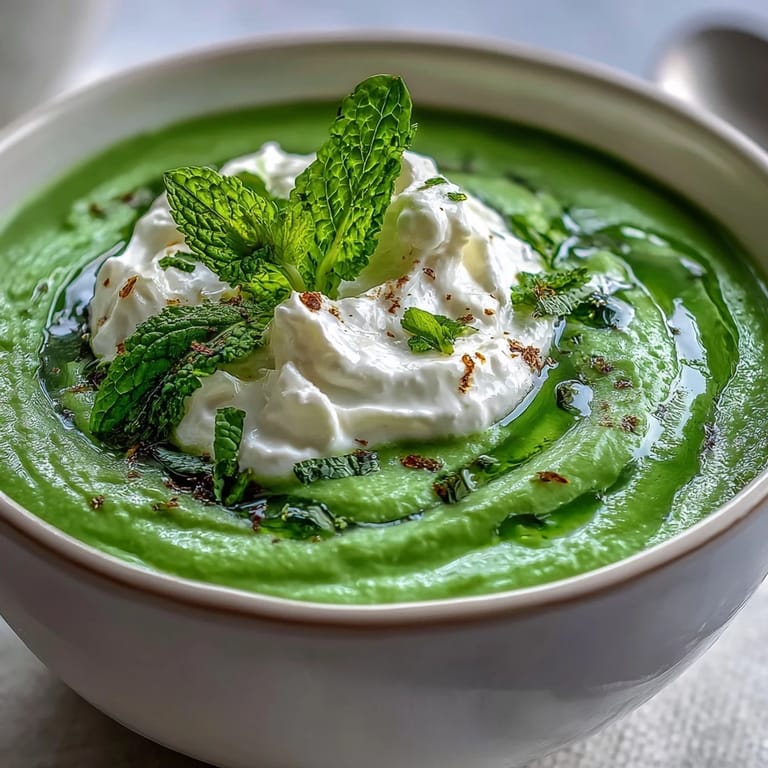
Save The first time I made this Spring Pea Soup, it was more about clearing out the fridge than chasing any culinary inspiration. Spring sunlight danced across my kitchen counter as I shelled peas, the sweet scent convincing me to turn a simple soup into something a bit special. My windows were open, the breeze carrying in laughter from a neighbor’s garden party, and suddenly the urge struck for a soup that was both comforting and bright. Between blending batches and sneaking spoonfuls of whipped ricotta, I realized sometimes the best meals come from a spontaneous craving for freshness. This became my go-to for impromptu gatherings—and my reward for getting through a stack of weekend chores.
I once made this soup for friends on a drizzly Friday night, the kind when everyone tracks in wet footprints and hangs up soggy jackets. The kitchen was cozy, steamed up from the bubbling peas, while we took turns whisking ricotta and guessing how green the mint oil would turn out. That night, we lingered around the table until well past midnight, slathering the crusty bread with every last swipe of cream and bright green oil. It’s those little accidents—someone accidentally dropping a lemon peel into the ricotta, or the soup simmering a bit too long—that somehow make the taste linger on. I still get texts asking for this soup once the trees start turning green.
Ingredients
- Olive oil: Helps soften the onion and garlic, infusing the base with richness—use good quality, as it really comes through.
- Yellow onion: The sweet, mellow flavor forms the backbone of the soup; finely chopping ensures it melts right into the broth.
- Garlic cloves: Just two wake up the peas without overpowering; mince well so no one gets a surprise chunk.
- Fresh or frozen sweet peas: Spring peas are ideal for sweetness and vibrant color, but frozen ones give surprisingly great results in a pinch.
- Vegetable broth: Adds depth; opt for a low-sodium version so you can control the saltiness yourself.
- Potato: A little diced potato makes the soup luxuriously creamy without the need for much cream—try to dice it small for even cooking.
- Sea salt and freshly ground black pepper: Essential for balance—add gradually, and taste as you go.
- Ricotta cheese: Go for a good, creamy ricotta; it whips up fluffier than cheap versions.
- Heavy cream: Just a splash helps the ricotta become pillowy and spoonable.
- Lemon zest: Brightens both ricotta and soup, but make sure not to go too heavy or it can steal the show.
- Fresh mint leaves: Their coolness is the secret weapon for the mint oil; dry thoroughly after blanching so you don’t water down the flavor.
- Extra virgin olive oil: Only use your best here—even a little mint oil elevates everything.
- Fresh peas (for garnish): A handful of blanched peas makes a pretty and tasty topping if you have them.
- Fresh mint leaves (for garnish): A sprig or two adds that ‘just picked’ feeling at the table.
- Crusty bread: Optional, but highly recommended for soaking up that last swirl of soup and oil.
Tired of Takeout? 🥡
Get 10 meals you can make faster than delivery arrives. Seriously.
One email. No spam. Unsubscribe anytime.
Instructions
- Sweat the aromatics:
- Warm the olive oil in your biggest saucepan over medium heat, letting the aroma of onion fill your space as you stir gently for a few minutes until it softens. Toss in the garlic, stirring just long enough for it to release its fragrance—about a minute.
- Create the soup base:
- Stir in the fresh (or frozen) peas, adding the diced potato, salt, and a good grind of black pepper; then pour in the vegetable broth, listening for that welcoming sizzle. Let the whole thing bubble up to a boil, then drop the heat and cover—simmer until peas and potato are tender but not mushy, around 10 to 12 minutes.
- Blend to velvety smoothness:
- Either use an immersion blender right in the pot, or carefully blend in batches—just be sure to achieve a bright, creamy consistency that will glide off your spoon. Taste now and tweak the seasoning; this is your chance to coax out every bit of flavor.
- Make the whipped ricotta:
- In a bowl, combine ricotta, cream, lemon zest, and a pinch of salt, then whisk or mix for a couple minutes until fluffy and light—don’t overbeat, just enough for soft peaks. Pop it in the fridge while you finish the soup so it stays cool and holds its shape.
- Prepare the mint oil:
- Give your mint leaves a quick 10-second blanch in boiling water, then shock in ice water to keep them vibrantly green; dry thoroughly on a paper towel. Blend with olive oil and a pinch of salt until completely smooth, then strain through a fine sieve if you want pure emerald oil.
- Assemble and serve:
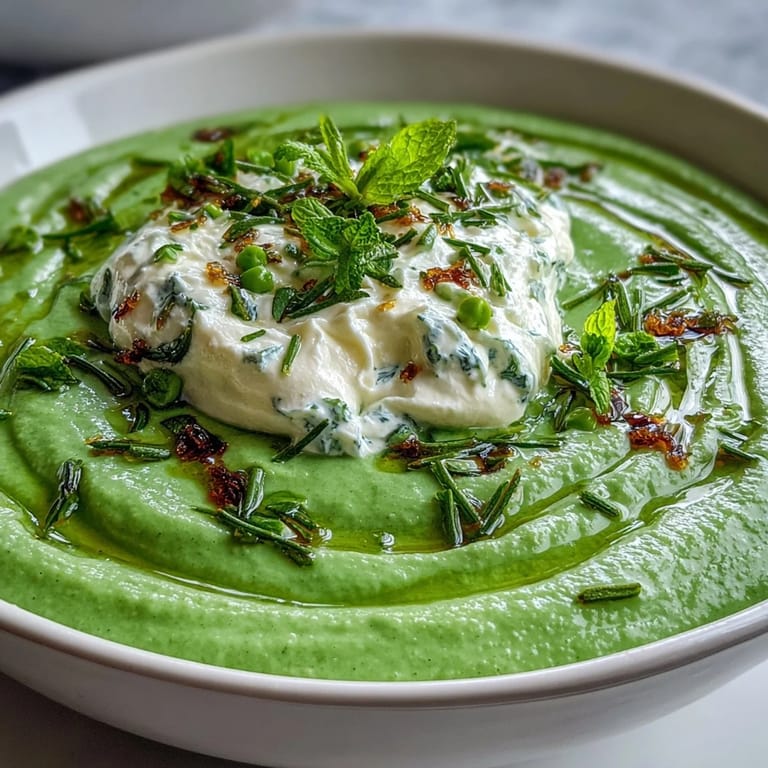
- Ladle soup into warm bowls, top each with a cloud of whipped ricotta, and thread a drizzle of mint oil over everything. Sprinkle any fresh peas or mint leaves over the top, and grab your crusty bread for dipping right away—it’s best enjoyed immediately.
 Save
Save The first time I tried drizzling mint oil over the finished bowls, I didn’t expect the whole room to go quiet at that green ribbon—it was like spring in edible form. One taste and everyone reached for their spoons, pausing only to swap ideas for what else could use a kiss of mint oil; it officially turned the meal into a little celebration.
Making It Your Own
The beauty of this soup is how adaptable it is depending on your mood, the season, or what you find at the market. If you’re feeling adventurous, try stirring in a pinch of chili flakes for subtle heat, or swap the potato for a chunk of cauliflower for an even lighter version. Sometimes I bump up the lemon zest for extra zip, especially if the peas aren’t at their sweetest. Even skipping the ricotta and serving the soup chilled turns it into the ideal summer starter.
Behind the Scenes: The Little Details
Every person who’s helped me make this soup has ended up with a personal preference—some like the mint oil blitzed super smooth, others keep it a bit rustic. I learned to prep a few extra bowls of whipped ricotta just in case (it disappears fast), and to keep a towel ready for stray droplets of oil on curious hands. Each batch is a bit of an experiment, but it always brings people into the action, whether someone’s grating zest or just approving the seasoning.
Serving and Leftovers
On days when I make extra, reheating gently over low heat helps preserve the soup’s color and freshness, and a fresh drizzle of mint oil wakes everything up again. If you’re lucky enough to have leftovers, they’re just as good cold from the fridge or reheated for a desk lunch, and the ricotta holds up surprisingly well overnight.
- Let the soup cool before storing for best color.
- Keep the mint oil and ricotta separate until serving.
- Don’t forget to save a slice of bread for sopping up the very last drops.
 Save
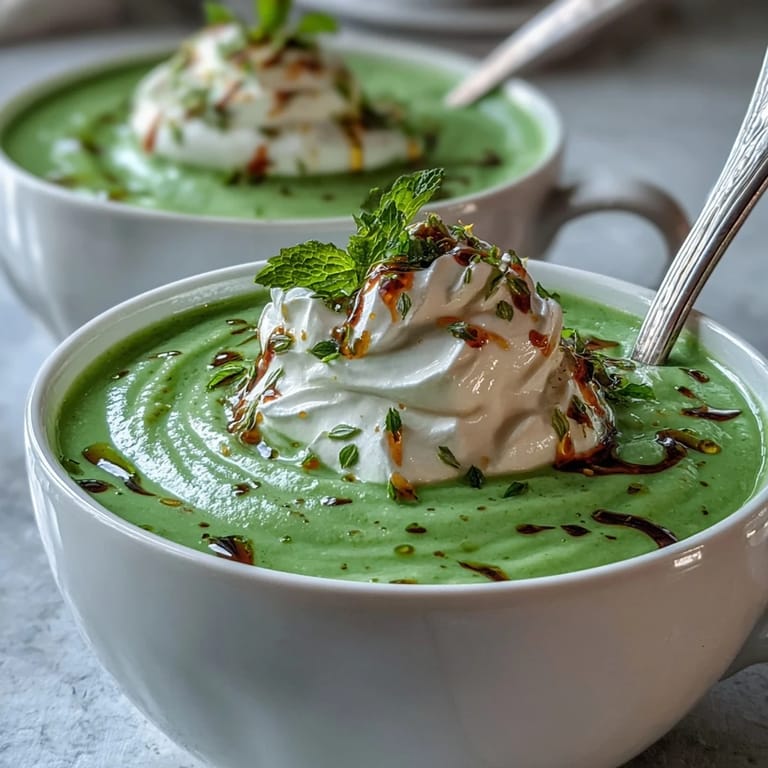
Save Whether you slurp it as a starter or a light main, this soup is a bowlful of sunshine. Here’s hoping it brings a spot of spring to your kitchen, no matter the season.
Recipe Questions & Answers
- → How do I keep the soup silky and smooth?
Cook the peas and potato until very tender, then blend thoroughly with an immersion blender or in batches in a high-speed blender. For an extra-silky finish, pass the purée through a fine sieve.
- → Can I make the whipped ricotta lighter?
Whip cold ricotta with a splash of heavy cream and a pinch of salt until airy. Chill briefly to help it hold shape; a hand mixer speeds the process and adds more volume.
- → What’s the best way to preserve the bright mint flavor in the oil?
Blanch mint leaves for a few seconds, cool in ice water, dry well, then blitz with extra-virgin olive oil. Strain if desired to remove solids and keep a vivid, green oil.
- → How should I reheat leftovers without losing texture?
Warm gently over low heat, stirring frequently. If the purée thickens, loosen with a splash of vegetable broth. Reheat only once for best texture and flavor.
- → What are good substitutions for a dairy-free version?
Use a plant-based ricotta alternative or blended silken tofu with a touch of coconut cream for richness. Replace cream with a neutral plant milk or aquafaba for volume.
- → Can this be served chilled and how should it be seasoned?
Yes—cool completely and chill for a refreshing summer starter. Brighten with a squeeze of lemon and taste for salt after chilling, as cold temperatures can mute seasoning.