 Save
Save I'll never forget the first time I arranged a Star of David salad platter for my family's Hanukkah dinner. My hands were shaking slightly as I positioned each cucumber slice, worried the geometry wouldn't work out. But as the colors came together—the deep greens, the bright reds of the tomatoes, the golden yellows—something magical happened. It wasn't just a salad anymore; it was a work of art that told our story. That night, everyone gathered around the table just to admire it before we ate, and somehow that moment felt like the real celebration.
I remember my friend Sarah coming into the kitchen right as I was finishing the platter for her surprise birthday party. She stood there silently for a moment, then said, "It's too beautiful to eat." Of course, we ate it anyway, and it became the thing everyone talked about for weeks. That's when I realized this recipe isn't just about making a salad—it's about creating a moment that lingers in people's memories.
Ingredients
- Baby spinach and arugula: These form your verdant canvas. The peppery bite of arugula against the mild sweetness of spinach creates depth right from the base. I always wash and dry them thoroughly—moisture is the enemy of a crisp salad that holds up through the evening.
- Cucumbers: Slice them thin and uniform; they're your guiding lines for the star's geometry. Keep them chilled right up until assembly so they stay crisp and snappy.
- Cherry tomatoes: These jewel-toned garnishes are where color blooms. Halving them exposes their interior and lets them nestle perfectly into the star's sections. Choose tomatoes at peak ripeness for the sweetest flavor.
- Bell peppers in red and yellow: The brightness here isn't just visual—these peppers bring natural sweetness and a subtle crunch that anchors the salad's texture.
- Purple cabbage: This addition brings an earthy sweetness and gorgeous color contrast. It also adds a satisfying crunch that persists even if the salad sits for a while.
- Red onion: A whisper of sharp bite. Use it sparingly and slice paper-thin so it doesn't overpower but rather complements with its sharpness.
- Feta cheese: Crumbled feta adds creamy, tangy notes that wake up every bite. If you want to keep it dairy-free, quality vegan feta works beautifully and holds its own.
- Kalamata olives: These briny, meaty gems are essential. Halving them releases their essence and prevents them from dominating any single bite.
- Capers and toasted pine nuts: Capers add a briny pop of personality. Toast the pine nuts yourself if you can—it transforms them from mild to deeply nutty and adds sophistication to the platter.
- Extra virgin olive oil and lemon juice: The foundation of your dressing. The oil should be fruity and the lemon freshly squeezed—these aren't places to cut corners.
- Red wine vinegar, honey, and Dijon mustard: Together, these create balance and emulsification, turning simple ingredients into a dressing that clings to every leaf.
Tired of Takeout? 🥡
Get 10 meals you can make faster than delivery arrives. Seriously.
One email. No spam. Unsubscribe anytime.
Instructions
- Start with your canvas:
- Find the largest, most beautiful platter or tray you own. This is about to become the centerpiece of your table. Layer your spinach and arugula in an even blanket across the entire surface—think of it as the foundation of a painting. Don't skimp on the greens; you want them visible but not overpowering the vegetables.
- Map out your star:
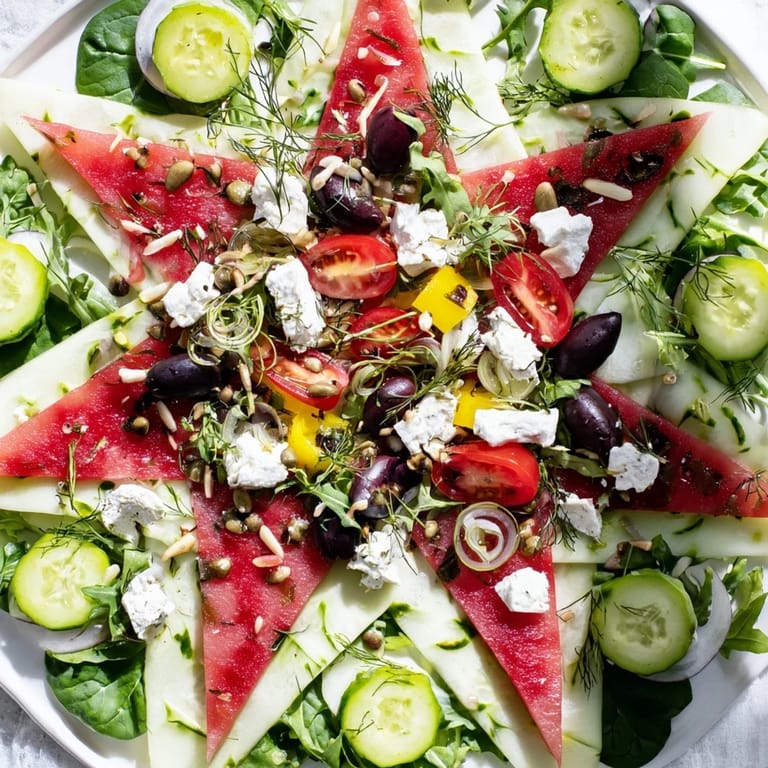
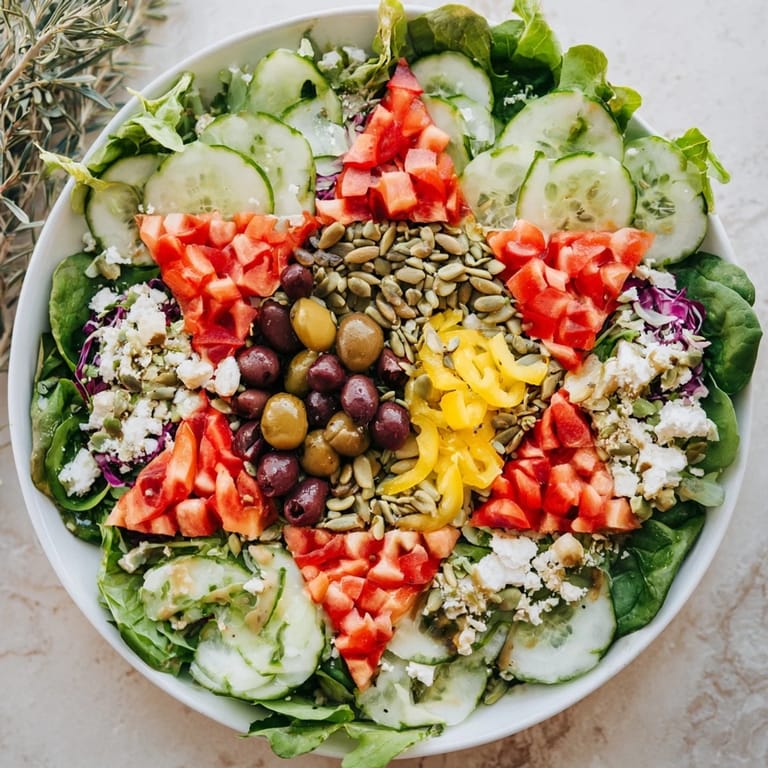
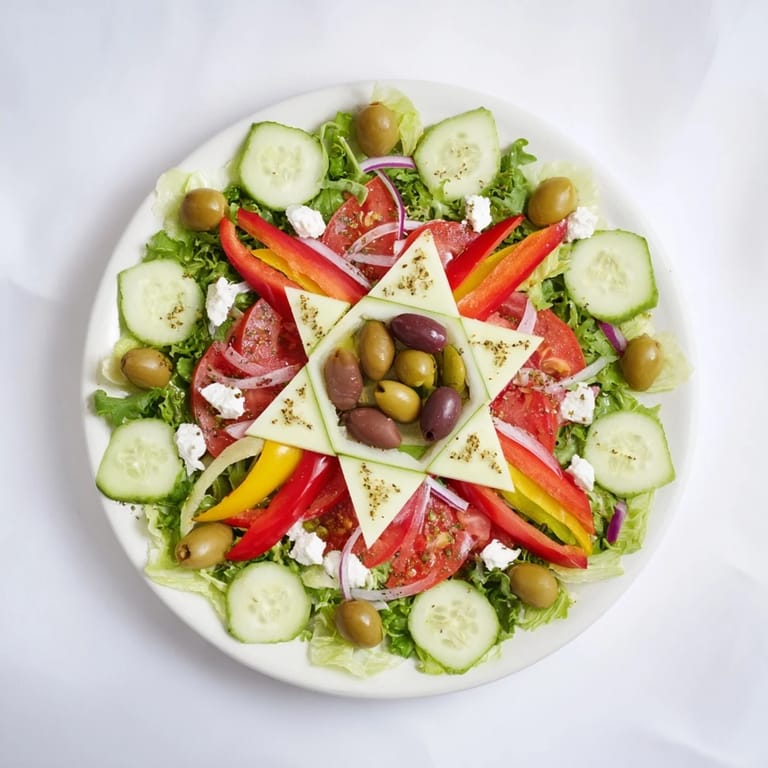
- Take a breath. You're about to create geometry on your plate. Using those thin cucumber slices, arrange two overlapping equilateral triangles. One points up, one points down. Don't worry about perfect angles—nature isn't perfect, and neither does your star need to be. Let your hands guide you and adjust as you go. The cucumber creates clean lines that anchor the entire composition.
- Paint with vegetables:
- Now comes the fun part. Fill the six interior triangles with your colorful vegetables. Put the cherry tomatoes in one section, radiating like little suns. The bell peppers in another, creating stripes of yellow and red. The purple cabbage somewhere that needs depth and earthiness. Think like you're painting with vegetables—each section should have its own color story that contrasts with its neighbors.
- Add texture and shimmer:
- Scatter the feta cheese, olives, capers, and toasted pine nuts around the edges and points of your star. These aren't just garnishes—they're the jewelry that makes your creation sparkle. Place them intentionally, following the lines of your geometry. Let some cluster at the points of the star for visual drama.
- Make the dressing magic:
- Whisk together your oil, lemon juice, vinegar, honey, and mustard in a small bowl. Watch as the vinegar and lemon juice help emulsify the oil into something silky and cohesive. The honey adds a subtle sweetness that rounds out the sharp notes. Taste it—adjust the salt and pepper until it makes you want to eat it with a spoon. This dressing should sing.
- The final reveal:
- Just before serving, drizzle the dressing over the platter in a gentle, even pattern. Or, if you prefer to let people dress their own portions, set it alongside with a small spoon. Either way, step back and admire what you've created. This is the moment where a salad becomes a celebration.
 Save
Save My daughter once asked me why I spent so much time on something that would be eaten in minutes. I realized then that the point wasn't the duration—it was the care. When you arrange something this beautiful, you're saying to everyone at your table: you matter enough for me to create something special. That's what this salad really is.
The Geometry of Flavor
There's something profound about the Star of David that makes this more than just a pretty platter. Each triangle represents different flavor and texture zones, so when you build your salad, you're creating a experience that evolves with every bite. The crispness of cucumber against creamy feta, the earthiness of spinach against the bright pop of tomato—these contrasts are intentional. When you arrange them geometrically, you're not just feeding people; you're orchestrating an experience that engages all their senses before the fork even touches the plate.
Making It Your Own
This recipe is forgiving and flexible, which is part of what makes it special. For added protein, scatter warm roasted chickpeas or grilled chicken strips throughout the star—they add substance without disrupting the visual flow. You can also switch out vegetables based on what's at peak season in your market. Spring calls for fresh peas and tender radishes. Summer begs for heirloom tomatoes in every color. Fall welcomes shredded beets and carrots. The star shape is your constant; the vegetables are your variables.
Serving and Storing
Serve this platter on a table where it can shine as a centerpiece for at least a few minutes before people dig in. Pair it with warm pita chips, crackers, or matzo for textural variety. If you have leftovers—and honestly, it's rare that you do—store the undressed vegetables in airtight containers in the refrigerator for up to two days. The composed platter loses its magic after a few hours, but the individual components can be remixed into a simple salad the next day.
- For a dairy-free version, substitute vegan feta and use a plant-based oil in your dressing
- Make your dressing up to four hours ahead and store it in a sealed jar; it will only improve as flavors meld
- Toast your pine nuts fresh if possible—they elevate the entire dish with their warmth and depth
 Save
Save This salad is a reminder that sometimes the most meaningful meals aren't the most complicated ones. They're the ones made with intention, arranged with love, and served with the understanding that you're feeding more than just bodies—you're nourishing moments that will linger long after the last leaf is eaten.