 Save
Save The first time I made chicken sushi bake, I was standing in my kitchen on a Tuesday evening, craving sushi but too tired to roll anything by hand. I grabbed some leftover rotisserie chicken, spooned out my rice cooker's contents, and thought: what if I just layered it all in a baking dish like a casserole? Twenty-five minutes later, golden cheese bubbling on top, I pulled it out and realized I'd accidentally created something my friends would request again and again. It's become the dish I make when I want to impress without the fussy work.
I served this at a casual dinner party once, scooping it straight onto nori sheets so guests could eat it with their hands like sushi rolls. Watching my friend's face light up as they realized it was warm and creamy inside—that's when I knew this wasn't just a lazy weeknight meal. It became the dish I pull out when I want everyone at the table to feel like they're eating something special, even if I made it without breaking a sweat.
Ingredients
- Sushi rice: The foundation matters here—sushi rice has just enough starch to hold together when seasoned, giving you that tender-but-cohesive texture that makes each bite feel intentional.
- Rice vinegar, sugar, and salt: This trio is what transforms plain rice into something that tastes alive; don't skip the seasoning step or you'll miss the whole point.
- Cooked chicken breast: Shredded works better than diced because it distributes more evenly and stays moist through baking.
- Kewpie mayonnaise: Japanese mayo has more egg yolks and tastes richer than American brands—it makes a real difference in the creamy layer.
- Cream cheese and sriracha: The cream cheese adds tang and helps bind everything, while sriracha brings the heat that makes you keep coming back for another bite.
- Mozzarella cheese: It melts into golden pockets that catch the heat and create little crispy edges you'll find yourself hunting for.
- Furikake seasoning: This adds umami depth and a hint of seaweed flavor without overwhelming anything.
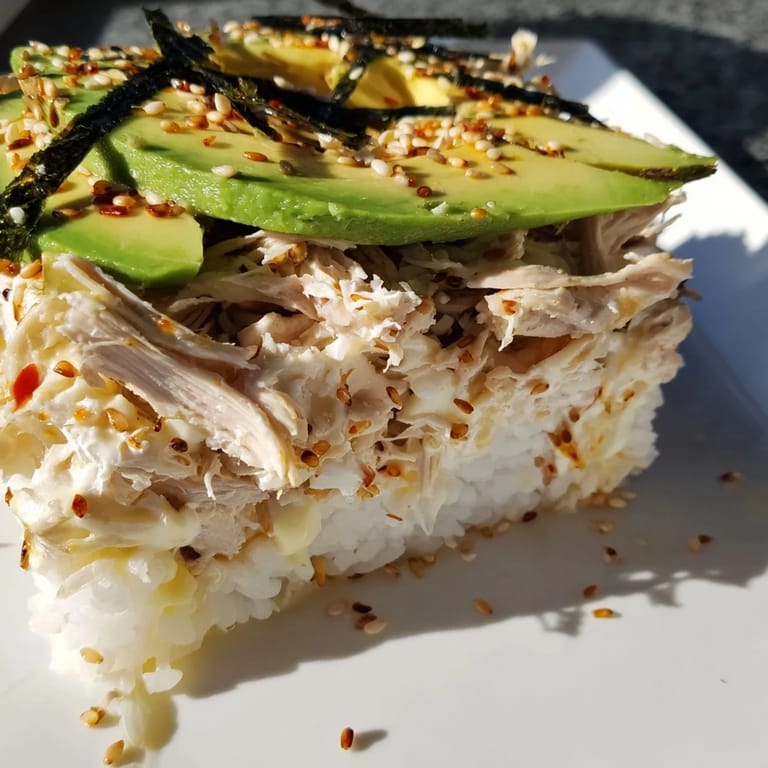
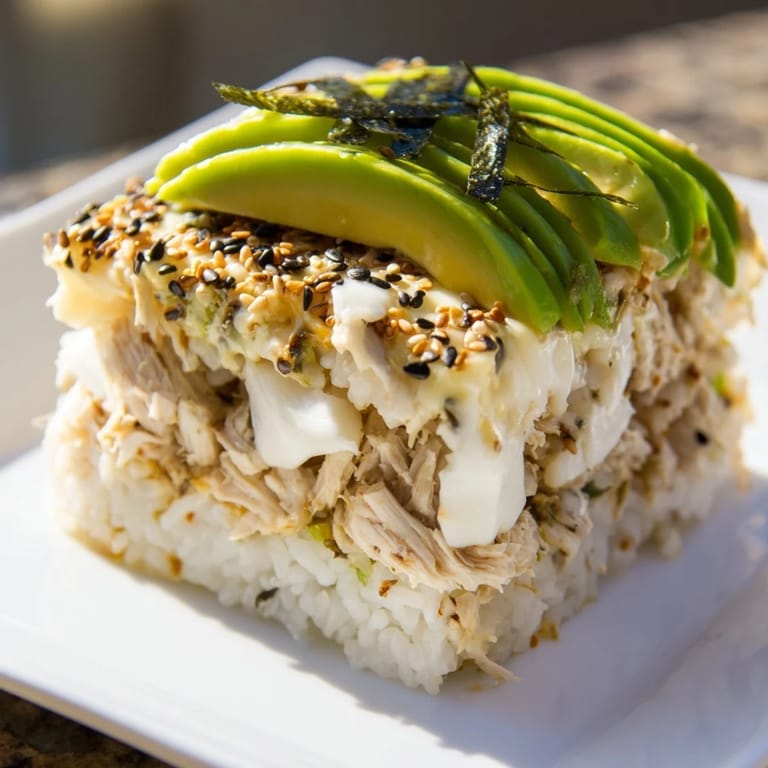
- Avocado and nori: These stay fresh by going on after baking, keeping their delicate texture against the warm, creamy layers below.
Tired of Takeout? 🥡
Get 10 meals you can make faster than delivery arrives. Seriously.
One email. No spam. Unsubscribe anytime.
Instructions
- Get your oven ready and prep the rice:
- Preheat to 400°F and grease your baking dish while you rinse the rice under cold water until it runs clear—this removes excess starch so your rice stays separate and fluffy, not gummy.
- Cook the rice to tender perfection:
- Bring 2 1/2 cups water to a boil with the rinsed rice, cover, and simmer for 15 minutes, then let it rest covered for 10 minutes off the heat. You'll know it's ready when a grain breaks easily between your teeth and smells slightly sweet.
- Season the warm rice with the vinegar mixture:
- Dissolve the rice vinegar, sugar, and salt in a small bowl first so there are no grainy surprises, then gently fold it into the warm rice using a wooden spoon—this keeps the grains intact instead of turning them to mush.
- Build the creamy chicken layer:
- Combine the shredded chicken with mayo, cream cheese, sriracha, soy sauce, and green onions in a bowl, stirring until everything is evenly coated and no white streaks of cream cheese remain.
- Assemble the casserole:
- Spread the seasoned rice in an even layer across your baking dish, sprinkle furikake over it, then top with the chicken mixture and shredded mozzarella mixed with the remaining furikake.
- Bake until the cheese turns golden:
- Slide it into the oven for 20 to 25 minutes—you're looking for the cheese to melt completely and develop little golden-brown spots on top, not bubble aggressively.
- Cool briefly, then finish with fresh toppings:
- Let it rest for 5 minutes so the cheese sets slightly, then arrange sliced avocado, nori strips, and sesame seeds on top before drizzling with extra sriracha and mayo.
 Save
Save There was an afternoon when my partner's mother tried this and said it reminded her of the sushi she ate in Tokyo, but better because she could eat it warm, sitting at our kitchen table instead of perched at a counter. That's when food stops being about recipes and starts being about connection—when something borrowed from another cuisine becomes its own thing and somehow brings people closer together.
Why the Layers Matter
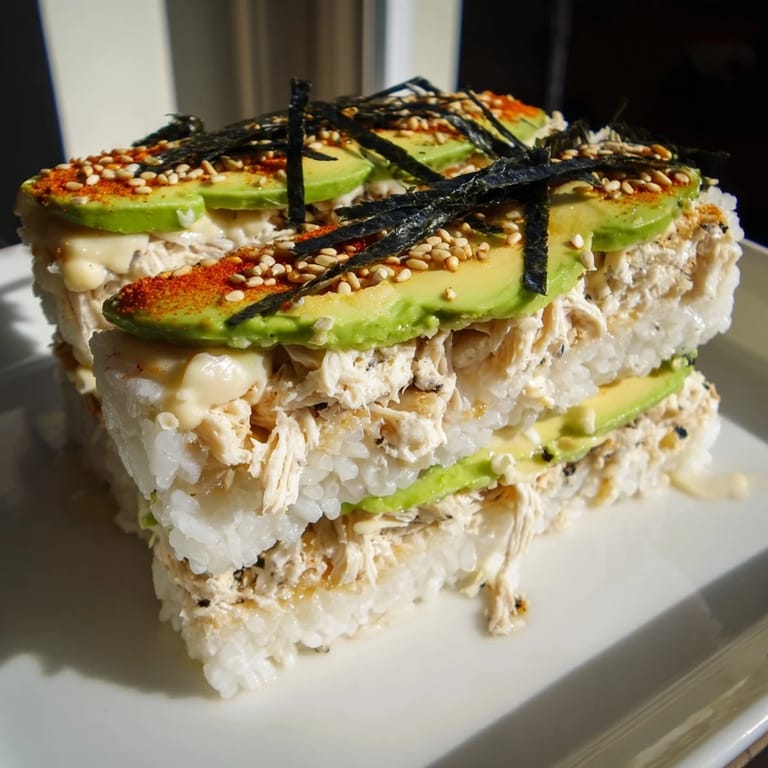
Each layer in this casserole has a job. The seasoned rice at the bottom is your canvas—it soaks up flavors from above without falling apart. The chicken mixture in the middle stays creamy because the rice underneath keeps it from drying out in the oven. The cheese on top melts into every crevice and creates a golden shell that holds everything together. Skip any layer or mess with the order, and you lose the balance that makes this dish work. Understanding why things are layered this way means you can confidently swap ingredients or adjust flavors without accidentally breaking the formula.
Flavor Combinations That Work
The sriracha brings gentle heat, the soy sauce adds umami depth, and the cream cheese rounds everything out with richness. The sweetness in the seasoned rice and the umami from furikake balance the spice so nothing becomes one-note. When people eat this, they taste chicken and sushi and comfort all at once—it's fusion in the best sense, where nothing feels out of place. If you want more depth, add a splash of mirin to the chicken mixture. If you prefer less heat, cut the sriracha in half. The bones of the recipe are strong enough to handle small changes without falling apart.
Serving and Storage Tips
This dish is best served warm, but it's one of those rare casseroles that actually tastes good the next day cold, spooned straight from the fridge if you're the kind of person who does that. The flavors have time to settle overnight, and somehow the whole thing tastes even more cohesive. Leftover pieces reheat gently in a 325°F oven covered with foil for about 10 minutes, or you can eat them at room temperature with a drizzle of extra mayo if you're in a hurry.
- Store covered in the refrigerator for up to 3 days and reheat gently so the rice doesn't dry out.
- Freeze portions in individual containers for up to a month, then thaw overnight in the fridge before reheating.
- Add the avocado and nori fresh each time if you're saving leftovers, since they don't hold up well after a day.
 Save
Save This casserole taught me that sometimes the best recipes aren't the ones that follow tradition perfectly—they're the ones that respect the spirit of a dish while making it entirely your own. Serve it warm, watch people's faces, and enjoy knowing you made something that tastes like you put in far more effort than you actually did.
Recipe Questions & Answers
- → What type of rice is best for this dish?
Sushi rice is ideal as it becomes sticky when cooked, helping the layers hold together and offering the perfect texture for this baked dish.
- → Can I substitute the chicken with another protein?
Yes, shredded rotisserie chicken works well for extra flavor and convenience, or you can use cooked turkey or tofu as alternatives.
- → How is the spicy flavor adjusted?
Sriracha is used for heat; you can vary the amount added to the chicken mixture or as a drizzle to control spice levels.
- → What role does furikake seasoning play?
Furikake adds a savory, umami-packed crunch with seaweed, sesame, and dried fish notes, enhancing overall flavor complexity.
- → How should the dish be served?
Serve warm, scooping onto small plates or wrapping portions in nori strips or sheets for added texture and presentation.
- → Are there any common allergens to watch out for?
This dish contains dairy, soy, eggs, sesame, and possibly fish from furikake and nori. Always verify ingredient labels if allergies are a concern.