 Save
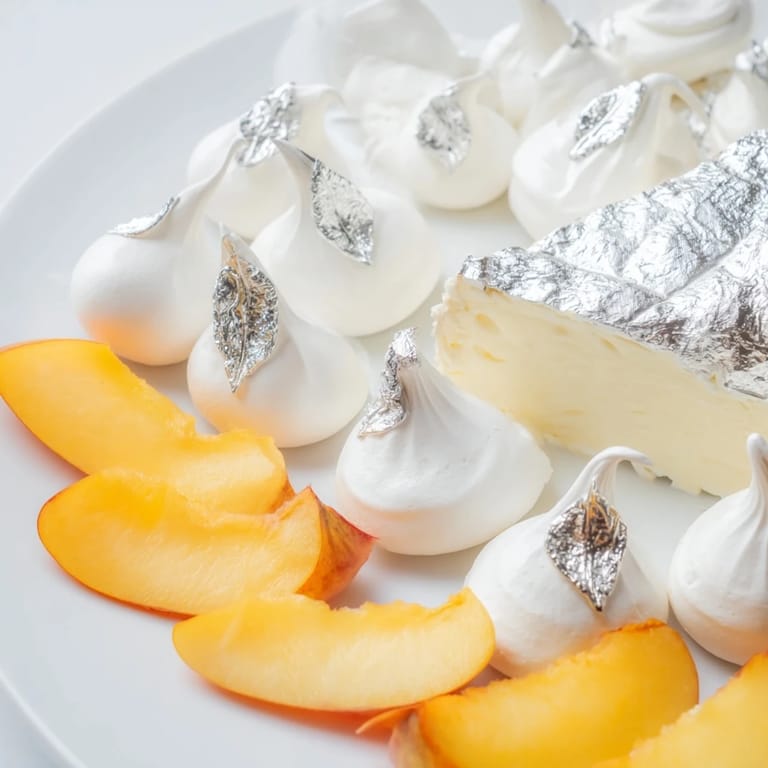
Save There's something about white food that makes a moment feel intentional. A few years back, I was invited to a friend's garden party on the first day of summer, and I arrived with the usual anxiety of not knowing what to bring. Then I remembered her obsession with elegant simplicity, and I thought: what if I built an entire board that was nothing but shades of cream, ivory, and pearl? The Pearly Gates came together as I was driving over, a vision of soft textures and delicate flavors that somehow felt both effortless and ceremonial.
That first summer party was genuinely transformative. My friend's partner took one look at the board and said it reminded him of eating clouds, which sounds absurd but somehow stuck with everyone there. By the end of the evening, people were breaking off pieces of meringue to scoop into the brie, dunking peaches into the cheese like it was fondue, and asking if I'd made it specifically to make them feel fancy. I hadn't, but I was happy to take credit.
Ingredients
- Brie cheese, 250 g: This is the board's anchor, so choose one that's creamy but still holds its shape when chilled—a younger brie is actually better here than an aged one.
- White peaches, 3 ripe ones: The sweetness and juiciness matter more than the exact count; if they're not quite ripe, leave them in the sun for a day.
- Meringue kisses or nests, 12 small: Store-bought saves you an oven, but homemade meringues have an airiness that feels almost impossible to bite through.
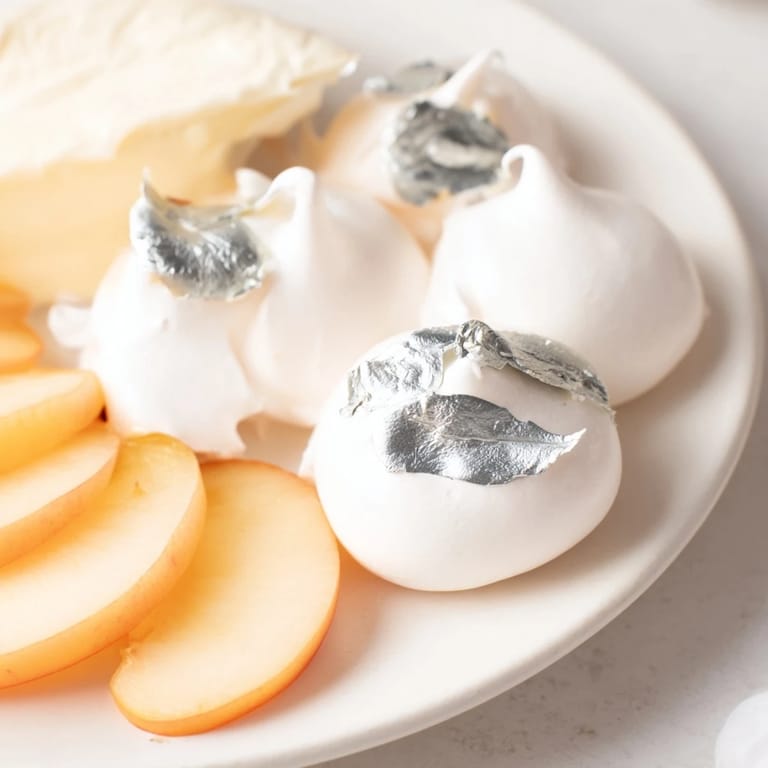
- Edible silver leaf: A few flakes go an impossibly long way; this is where the board shifts from pretty to precious.
- White grapes and blanched almonds: These are optional, but they add gentle texture and a whisper of something toasty.
Tired of Takeout? 🥡
Get 10 meals you can make faster than delivery arrives. Seriously.
One email. No spam. Unsubscribe anytime.
Instructions
- Make or gather your meringue:
- If you're making from scratch, preheat your oven to 90°C (200°F) and beat two egg whites with 100 g superfine sugar and a pinch of cream of tartar until the peaks stand up and don't fall. Pipe small mounds onto parchment, then let them dry out in the low oven for a full hour until they're crisp all the way through.
- Center the brie:
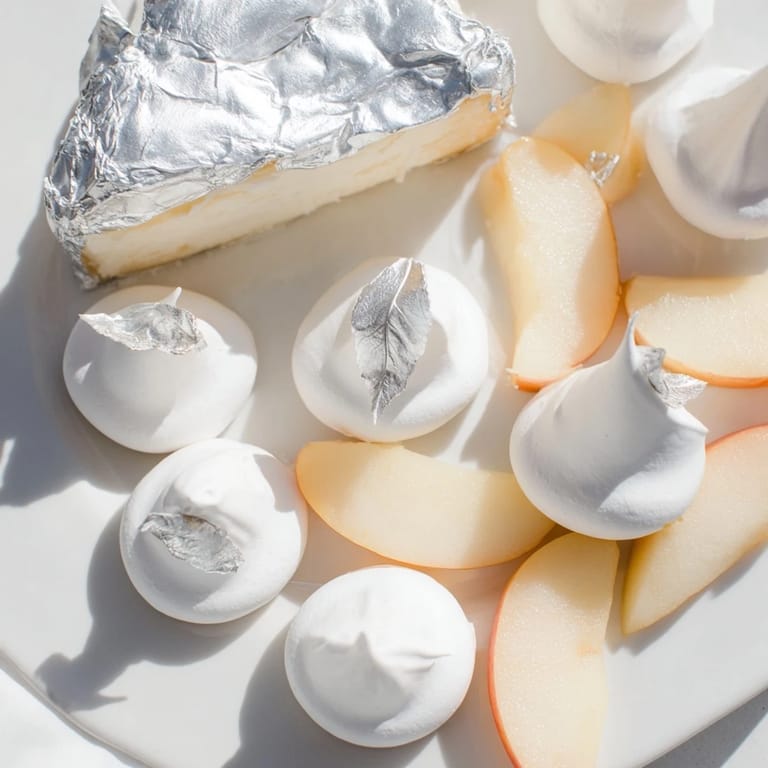
- Place it on your board with enough breathing room around it—this is your focal point, so give it space to be admired.
- Fan the peaches:
- Slice them thin and overlap the slices in loose, casual arcs around the brie; the arrangement doesn't need to be perfect, just intentional.
- Cluster the meringue:
- Scatter the meringue pieces in small groups so they frame the fruit without crowding it; they're almost architectural elements at this point.
- Add your optional touches:
- If you're using grapes and almonds, tuck them into gaps so the board feels abundant but not overwhelming.
- Apply the silver leaf:
- Use tweezers to place delicate flakes on a few meringue pieces and maybe one or two peach slices; this feels indulgent even though you're using very little.
- Bring it to the table:
- Serve it immediately while the brie is still cool and the meringue is still crisp, and watch people instinctively slow down when they see it.
 Save
Save That garden party conversation taught me something unexpected: people don't just eat cheese boards, they tell stories around them. Someone mentioned a wedding in Switzerland where everything was white, someone else talked about their grandmother's pearl collection, and by the time the board was empty, we'd somehow covered half a dozen lifetimes' worth of memories.
How to Make This Yours
The magic of this board is that it's a framework, not a formula. If you can't find white peaches, pale apricots work beautifully, or even sliced pear. The brie is non-negotiable, but if someone's vegan, aquafaba meringues exist now and they're genuinely excellent. The key is keeping the color palette restrained and letting each element breathe.
When to Serve This
This board shines at moments that need a little lifting: the start of a special dinner, a garden party, an afternoon when someone's had good news, or just because you want to see someone's face change when they realize how beautiful food can be. It's not intimidating, but it's memorable.
The Shortcuts and Secrets
I learned these tricks the way everyone does: by making mistakes and then finding elegant solutions. Buying meringue saves you an entire hour and honestly, good store-bought meringue is nearly indistinguishable from homemade. Chilling the brie in the freezer for ten minutes right before serving keeps it firm enough to slice cleanly.
- If peaches aren't at their peak, you can macerate thin slices in a tiny bit of honey and lemon juice for twenty minutes to concentrate their sweetness.
- The silver leaf comes in booklets at specialty stores or online, and a single booklet will do dozens of boards—it's a one-time investment that lasts years.
- Serve this with something elegant to drink, but the board itself needs no sauce, dip, or accompaniment to shine.
 Save
Save This board exists in that perfect space where simplicity and elegance feel like the same thing. Serve it to people you want to make feel celebrated, and watch what happens.
Recipe Questions & Answers
- → How can I make the meringue for the cheese board?
Beat egg whites with superfine sugar and cream of tartar until stiff peaks form. Pipe small mounds onto a lined baking tray and bake at 90°C (200°F) for 1 hour until crisp. Cool before arranging.
- → Can I use store-bought meringue?
Yes, high-quality store-bought meringue kisses or nests can be used to save time without compromising texture.
- → What is the best way to serve the brie?
Serve the brie slightly chilled to maintain its creamy texture and enhance the overall balance of the board.
- → Are there suggested accompaniments to add?
Optional additions include white grapes and raw or lightly toasted blanched almonds, which add variety in texture and flavor.
- → How do I apply the edible silver leaf?
Use tweezers to gently place small pieces of edible silver leaf on the meringue and peach slices for a decorative effect.
- → Is this suitable for a vegetarian or gluten-free diet?
Yes, this board is vegetarian and can be gluten-free if using gluten-free meringue.