 Save
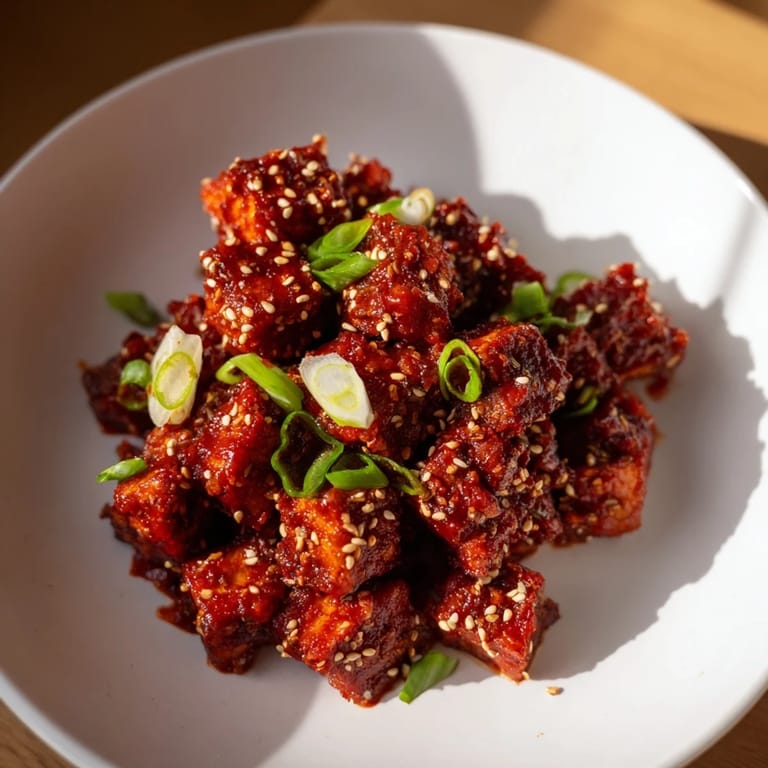
Save My first attempt at gochujang tofu happened by accident on a Tuesday night when I had exactly three ingredients and too much confidence. I'd been craving something sticky and spicy, the kind of dish that clings to your palate and makes you reach for another bite, so I raided my Korean pantry and started improvising. What emerged from that pan was glossy, caramelized cubes that somehow tasted restaurant-quality, and I've been chasing that same magic ever since.
I made this for my roommate one night after she'd had a rough day at work, and watching her face light up when she tasted the first bite reminded me why I cook. She asked for the recipe three times before she left the kitchen, and now it's become our unspoken comfort food, the thing we both reach for when we need something that feels both nourishing and celebratory.
Ingredients
- Firm tofu (400g): Pressing it properly is non-negotiable—wet tofu will steam instead of crisp, and nobody wants that. Give it at least ten minutes under something heavy, and you'll notice the difference immediately.
- Cornstarch (2 tbsp): This is your secret weapon for crispness; it creates a delicate, shatteringly good crust that keeps even after you toss it with sauce.
- Salt and neutral oil: Don't skip seasoning the cornstarch mixture, and use an oil with a high smoke point so your pan stays hot enough to develop a proper sear.
- Gochujang (2 tbsp): This Korean chili paste is the soul of the dish; find it in the Asian section or online, and don't substitute it with sriracha unless you're prepared for a completely different flavor.
- Honey (2 tbsp): The sweetness balances the chili heat and creates that sticky glaze everything sticks to your chopsticks beautifully.
- Soy sauce, rice vinegar, and sesame oil: Together they build complexity—umami, acidity, and that toasted nuttiness that makes you pause mid-chew.
- Garlic and ginger (fresh): Mincing them finely helps them dissolve into the sauce rather than create chunks; the warmth of ginger especially cuts through the sweetness.
- Sesame seeds and green onions (garnish): These aren't just decoration; they add textural contrast and brightness that makes the whole dish sing.
Tired of Takeout? 🥡
Get 10 meals you can make faster than delivery arrives. Seriously.
One email. No spam. Unsubscribe anytime.
Instructions
- Press your tofu properly:
- Wrap the block in a clean kitchen towel, place it on a plate, and weight it down with something heavy like a cast iron skillet or some cans. The longer you wait, the crispier your final cubes will be, so commit to those full ten minutes.
- Cube and coat:
- Cut into roughly 2 cm pieces and toss with cornstarch and salt until everything looks like it's been dusted with snow. This mixture is what creates that shatteringly crisp exterior.
- Sear until golden:
- Heat your oil until it shimmers and just starts to smoke, then add the tofu cubes without moving them for at least two minutes. Patience here rewards you with a golden crust that actually stays on even after saucing.
- Build the sauce:
- Whisk gochujang, honey, soy sauce, rice vinegar, sesame oil, garlic, and ginger together in a bowl until smooth. Taste it and adjust the gochujang if you want more heat or the honey if you want more sweetness.
- Simmer and thicken:
- Pour the sauce into the empty pan and let it bubble gently for a couple of minutes, stirring occasionally. You'll watch it deepen in color and thicken slightly as the heat works its magic.
- Toss and gloss:
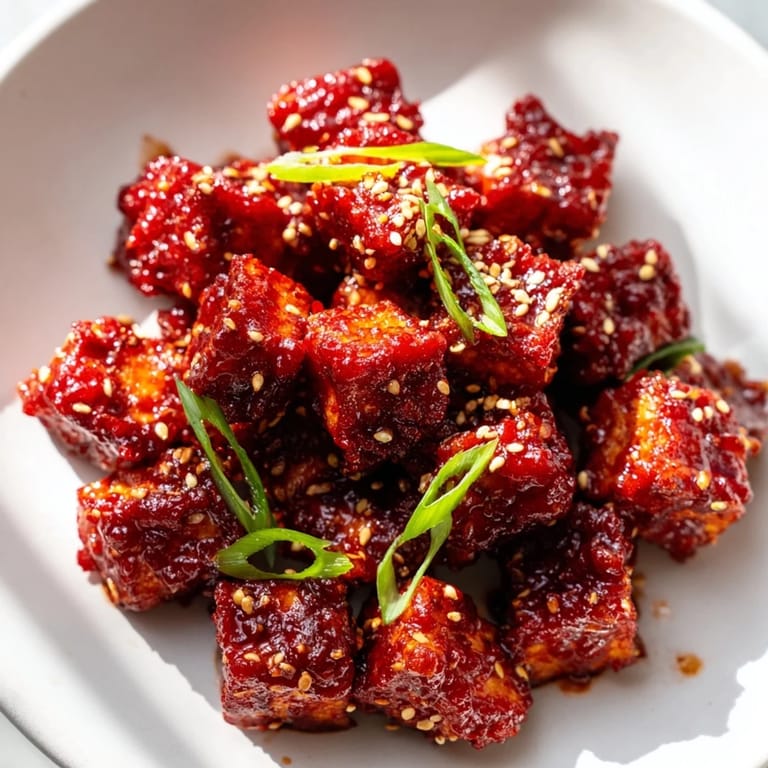
- Return the tofu to the pan and turn everything together until every cube is coated in that sticky, shiny glaze. Two minutes is enough to let the sauce cling properly without the tofu losing its crispness.
- Finish and serve:
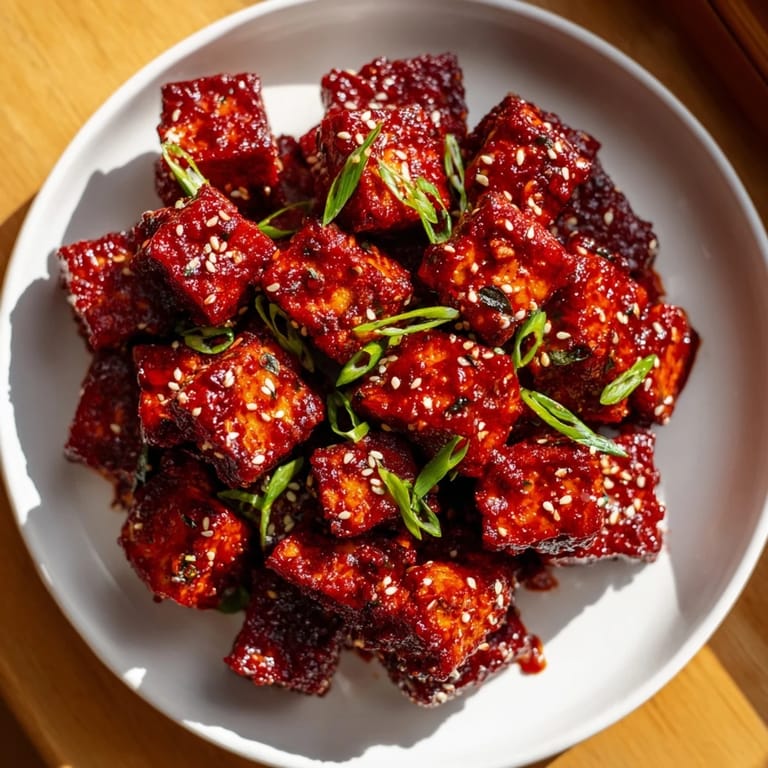
- Transfer to a plate or bowl, scatter with sesame seeds and green onions while everything is still warm, and serve immediately either on its own or over rice.
 Save
Save There's a moment when you return the crispy tofu to the simmering sauce and hear that satisfying sizzle, watching the glaze transform from loose to clinging, that made me fall in love with cooking all over again. It's the moment when technique and ingredients stop being separate things and become something alive on the stove.
Why This Works So Well
The interplay between sweet and spicy is what makes this dish memorable—honey is doing the heavy lifting here, tempering the raw intensity of gochujang into something nuanced and crave-able. When you add soy sauce and rice vinegar to the mix, you're layering umami and acidity underneath that sweetness, which keeps the whole thing from becoming one-dimensional. The sesame oil ties it all together with a toasted richness that feels almost luxurious for something this simple to make.
Serving Suggestions and Variations
This recipe works beautifully over steamed jasmine rice where you can soak up every last drop of sauce, or tucked into butter lettuce leaves if you're looking for something lighter. I've also served it cold the next day as a grain bowl topping, mixed with roasted vegetables and a handful of greens, and it was somehow even better after the flavors had time to settle. The crispness fades a little, but the glaze gets stickier and more pronounced, which some people actually prefer.
Swaps and Tweaks
If you're vegan, maple syrup or agave nectar will swap in perfectly for the honey without changing the balance of the dish—I actually prefer maple for the slightly deeper notes it brings. The gochujang amount is entirely up to your spice tolerance; I know people who cut it in half and people who double it, and both versions are excellent. If you want to bulk this up into a full meal, add some roasted broccoli or bell peppers to the pan in the last minute so they get a light glaze too, and suddenly you've got something that feels more substantial without losing the simplicity.
- Keep extra sauce on hand if you like yours saucier; these ratios are forgiving about adjustment.
- Green onions and sesame seeds are not optional garnish—they're what makes it taste finished.
- Leftover tofu keeps in the fridge for two days and reheats beautifully in a warm skillet with a splash of water.
 Save
Save This dish has become my go-to when I want to cook something that feels special without being complicated, and that's the kind of recipe worth keeping close. Eat it warm, eat it with people you like, and watch their faces when they realize tofu can actually be delicious.
Recipe Questions & Answers
- → How do I get the tofu crispy?
Press tofu to remove moisture, coat with cornstarch, then pan-fry in neutral oil on medium-high heat, turning until golden on all sides.
- → Can the honey be substituted for a vegan option?
Yes, maple syrup or agave nectar make excellent vegan alternatives to honey while maintaining sweetness.
- → What level of spiciness does gochujang add?
Gochujang provides a moderate, savory heat with subtle sweetness. Adjust quantity to control the spice level.
- → What dishes pair well with this tofu?
Serve with steamed rice, quinoa, lettuce wraps, or alongside sautéed vegetables like broccoli and bell peppers for a complete meal.
- → Are there common allergens in the ingredients?
This dish contains soy (tofu, soy sauce) and sesame (oil, seeds). Gochujang may include wheat; check labels if gluten-free is needed.