 Save
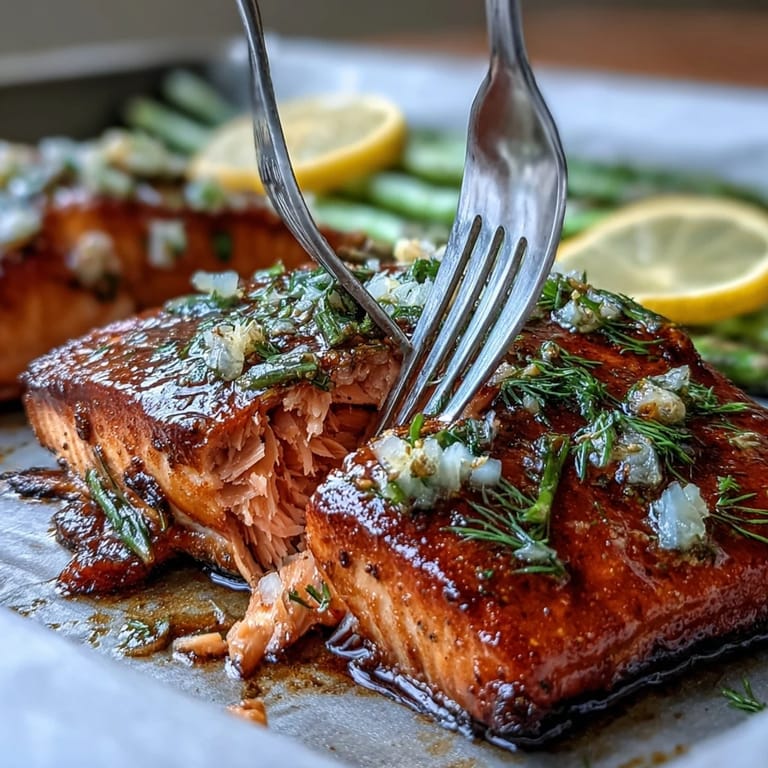
Save Salmon and asparagus roasting together in one pan has a way of making the kitchen smell like spring’s just arrived, even if it’s been raining all day. Just last weekend, as I squeezed a lemon over the fillet, the bright scent woke everyone up before breakfast was even sorted. That zingy aroma mingling with dill reminded me how sometimes, the simplest prep feels the most satisfying. More than once, I’ve pulled this sheet pan out of the oven to spontaneous applause from hungry friends. There’s just something about minimal cleanup and maximum flavor that bolsters your mood midweek.
One Tuesday evening, I made this salmon for my cousin who showed up exhausted after work. We barely spoke until the first bite—but after, we swapped stories over empty plates, picking lemon slices for extra zest. Cooking for her that night felt less like a chore and more like a little gift. The ritual of prepping together—trimming asparagus, patting down fish—made for good company. Now she requests it every time she visits, timing her arrival to catch it still warm.
Ingredients
- Salmon fillet (about 1.2–1.5 lbs / 550–700 g), skin-on: The skin keeps the fish moist and creates a gentle barrier for roasting—just make sure to pat it dry for crispness.
- Olive oil: A base for the marinade that helps these bold flavors seep in, plus gives veggies their sheen.
- Sea salt and black pepper: Don’t skip fresh ground pepper—the little bite lifts everything out of the ordinary.
- Garlic, minced: Two cloves are just enough to perfume the tray without overpowering the lemon-dill notes.
- Lemon (zest and juice): A punch of citrus sharpens every bite—roll the lemon on the counter before zesting for extra juice.
- Fresh dill, chopped: Dill’s grassy, slightly sweet undertone clings to salmon in a way no dried herb can.
- Asparagus (1 lb, woody ends trimmed): These roast up tender next to the fish; snap the ends off where they naturally break.
- Lemon slices and extra dill for garnish: Paper-thin lemon slices caramelize gently in the oven and look almost too pretty to eat.
Tired of Takeout? 🥡
Get 10 meals you can make faster than delivery arrives. Seriously.
One email. No spam. Unsubscribe anytime.
Instructions
- Prep Your Tray:
- Line a large baking tray with parchment for breezy cleanup (no scrubbing stuck-on bits required).
- Whisk Your Marinade:
- Blend olive oil, minced garlic, lemon zest, juice, dill, salt, and pepper in a small bowl—the scent alone is a mini boost.
- Ready the Salmon:
- Set the salmon skin-side down on the tray, pat it dry, and admire the fresh color before brushing on the marinade.
- Coat and Arrange:
- Cover the salmon generously with the lemon-dill mixture, letting some slip over the sides onto the tray.
- Nestle the Asparagus:
- Scatter asparagus spears around the fish, drizzle with olive oil, sprinkle salt and pepper, and give them a gentle toss.
- Lemon Layers:
- Lay thin lemon slices over the top of the salmon so they roast and mellow in flavor.
- Roast and Wait:
- Slide the tray into the oven at 400F (200C) and let it work its magic for about 18 to 20 minutes.
- Finish and Serve:
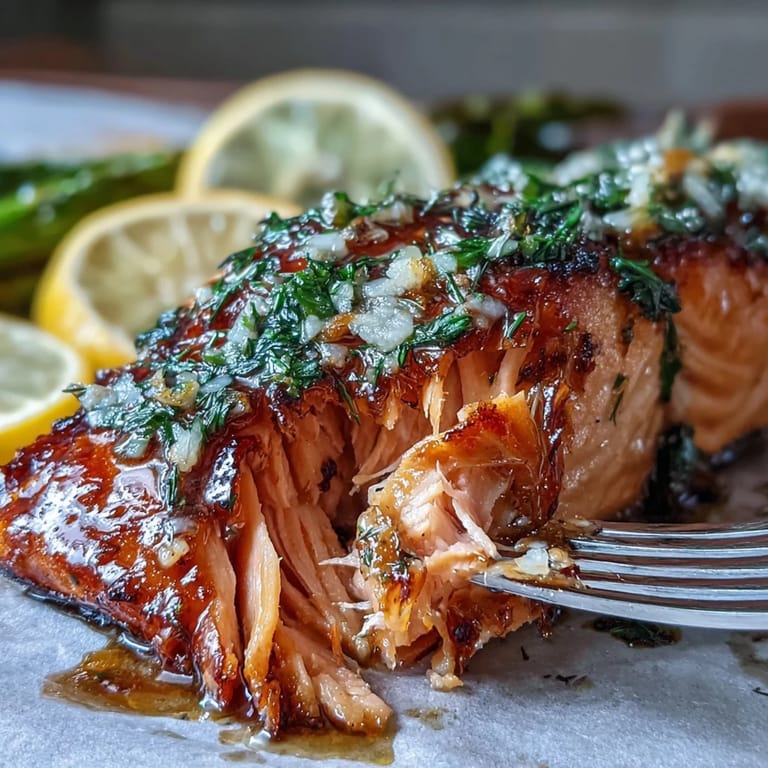
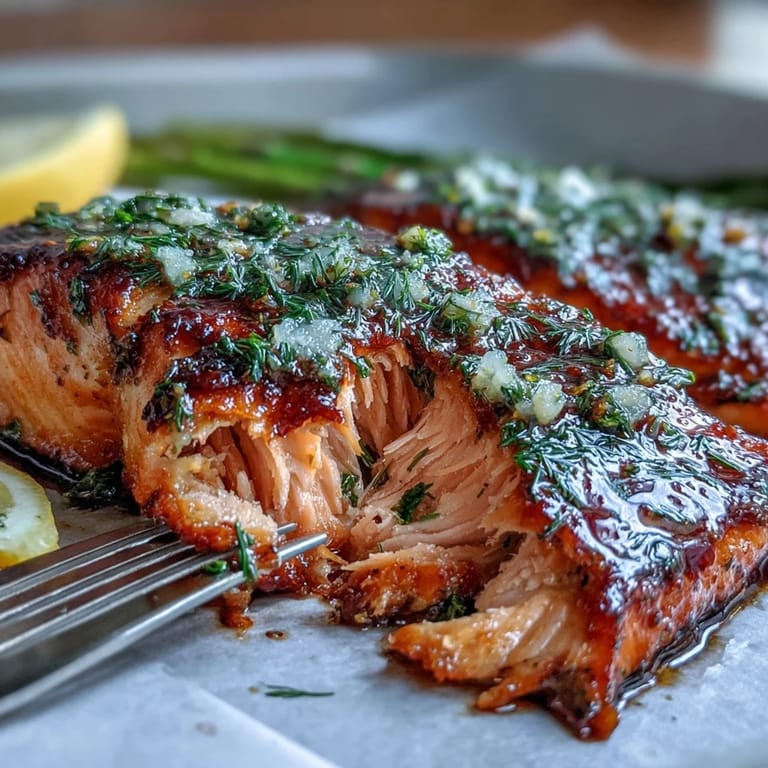
- Check that the salmon flakes easily and asparagus turns bright tender—then shower with extra dill and bring right to the table.
 Save
Save  Save
Save The night this dish debuted at a friendsgiving potluck, it vanished long before the turkey even earned a mention. People circled back for seconds and pulled out their phones to snap pictures of the golden fillet, ringed in asparagus. There was something about sharing a meal that looked fancy but came together so simply that worked its own kind of magic. That moment turned a quick recipe into a staple for me. It’s proof that sometimes, less really is more.
Let’s Talk About Swaps
Herbs can play musical chairs with this recipe. Subbing fresh tarragon or parsley for dill changes up the flavor profile, and both land well for those who aren’t dill devotees. I’ve also tossed in cherry tomatoes or sliced red onion when the fridge looked a little too bare, and both add a sweet burst and extra color. Keep the olive oil flowing to help everything roast evenly—dry veggies just aren’t as delicious.
How To Serve It Up
This dish is a natural with roasted potatoes or a tangle of quinoa, but a crisp green salad really lets those fresh flavors shine. If you’re feeling like a treat, a glass of Sauvignon Blanc or Pinot Grigio lifts it all to dinner-party status. For casual evenings, I use a big fork and eat right out of the tray while standing by the counter—no one’s judged yet. Leftovers, if you have any, are fantastic cold in a salad the next day. The ease of this meal means there’s always time for second helpings.
Kitchen Cleanup, Simplified
One of the unsung heroes of this recipe is the parchment-lined pan—everything lifts off in one go, and there’s barely a dish to wash. I keep a stash of pre-cut parchment in the drawer to make setup mindless. No fancy gadgets are needed, just a sharp knife, a bowl, and a spoon to get those juices drizzled just right. The only thing I wish someone told me sooner: asparagus goes limp if roasted too long, so keep watch during the last minutes.
- Squeeze a little extra fresh lemon over everything before serving for a final pop.
- Chop a handful of fresh dill for garnish only after plating to keep the color bright.
- Salmon is best just cooked through—err on the side of underdone and let it finish resting out of the oven.
 Save
Save 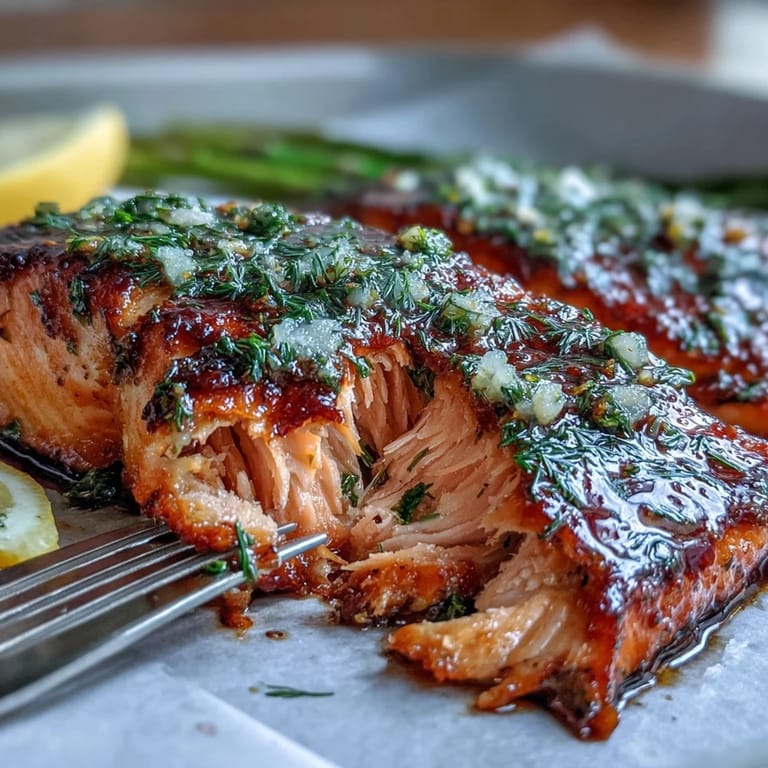 Save
Save I hope this dish brings as much ease and delight to your table as it has to mine. It’s proof that vibrant, fresh cooking can be effortless and still feel special.
Recipe Questions & Answers
- → How can I tell the salmon is cooked through?
The salmon is done when it flakes easily with a fork and the flesh is opaque but still moist. Check the thickest part—it should reach around 125–130°F for medium (carryover will raise it a few degrees).
- → Can I use individual salmon fillets instead of one whole fillet?
Yes. Arrange fillets skin-side down on the tray and adjust roasting time to 12–16 minutes depending on thickness. Keep an eye on doneness to avoid overcooking.
- → Is it okay to cook the salmon without the skin?
You can remove the skin, but keeping it on helps protect the flesh during roasting and makes handling easier. If you remove it, reduce cooking time slightly and watch for flaking.
- → What can I substitute for asparagus?
Thin green beans, broccolini, baby potatoes (parboiled), or halved cherry tomatoes work well. Adjust sizes so everything cooks evenly on the tray.
- → How should leftovers be stored and reheated?
Store cooled leftovers in an airtight container in the fridge for up to 2 days. Reheat gently in a 300°F oven for 8–10 minutes or warm in a skillet with a splash of olive oil to preserve texture.
- → Can I swap dill for another herb?
Yes—fresh parsley or tarragon provide a different but compatible flavor. Combine herbs with lemon and garlic for a bright finish.