 Save
Save I discovered lahmacun by accident at a cramped Istanbul market stall on a humid afternoon, watching a baker stretch dough so thin it became almost translucent. The woman working there moved with such practiced ease, spreading her meat mixture across the surface before sliding it into a fiery oven, and moments later pulling out something impossibly crispy and aromatic. I stood there eating it straight off the paper, burning my fingers, and decided right then I had to learn how to make it at home.
Years later, I made these for friends during a chaotic dinner party where half the kitchen was a disaster, and somehow these little Turkish flatbreads became the unexpected hero of the evening. People kept reaching for more, asking what they were, and I loved watching their expressions shift from skepticism to genuine delight as they bit into that crispy-soft contrast.
Ingredients
- All-purpose flour: The foundation—300g gives you enough dough for eight lahmacuns without being overwhelming to knead.
- Warm water: 180ml is the magic amount; too much and your dough gets sticky, too little and it won't come together.
- Instant yeast: Just 1 tsp wakes up the dough in time for dinner, no overnight waiting required.
- Olive oil: Use decent quality here because you taste it throughout, both in the dough and the topping.
- Ground lamb or beef: Lamb is traditional and gives a deeper flavor, but beef works just fine if that's what you have.
- Fresh vegetables (onion, garlic, tomato, bell pepper): Dice everything finely—the smaller the pieces, the more evenly the topping spreads and cooks.
- Tomato paste: This is your secret weapon for concentrated savory depth and helps bind everything together.
- Spices (cumin, paprika, black pepper, chili flakes): These create that distinctive Turkish flavor profile that makes people stop and ask what they're tasting.
- Fresh parsley: Use it generously both in the topping and for finishing; it brightens everything it touches.
- Lemon wedges and sumac: These are your final flourish—the squeeze of lemon and sprinkle of sumac transform a good lahmacun into an unforgettable one.
Tired of Takeout? 🥡
Get 10 meals you can make faster than delivery arrives. Seriously.
One email. No spam. Unsubscribe anytime.
Instructions
- Make the dough:
- Combine your flour, sugar, and salt in a bowl, then dissolve the yeast in warm water and mix it in with olive oil. Knead for 5-7 minutes until the dough becomes smooth and elastic, then cover and let it rise for 30 minutes until it roughly doubles—you're building air and flavor here.
- Build the meat topping:
- Mix all your meat, vegetables, spices, and herbs together in a bowl, stirring thoroughly until everything is evenly distributed. Take a moment to taste a tiny piece and adjust the seasoning—this is when you can make it more spiced, more herby, or more savory depending on what you're craving.
- Heat your oven aggressively:
- Get your oven to its highest setting (around 250°C/480°F) and let a pizza stone or baking tray sit inside to get absolutely hot. This heat is what gives you that crispy bottom that makes lahmacun special.
- Roll out your circles:
- Divide the risen dough into eight equal balls and roll each one as thin as you can manage—think almost translucent, around 20cm across. Don't stress about perfect circles; they're more beautiful when they're slightly irregular.
- Spread the topping:
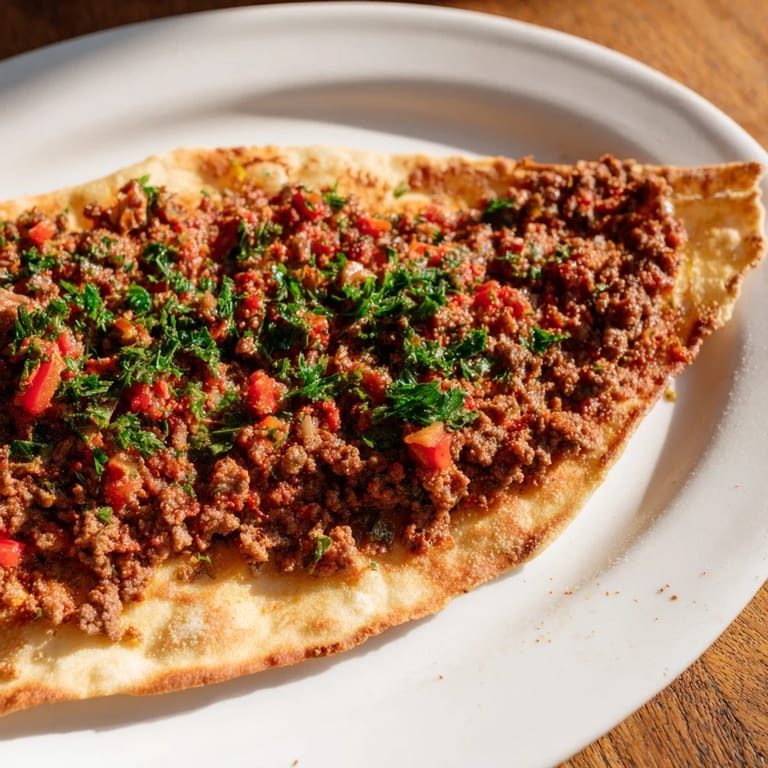
- Lay your meat mixture across each dough round in an even, thin layer, leaving just a tiny border so the edges can puff up and crisp. This is where patience matters—rushing the spreading leads to lumpy, unevenly cooked lahmacuns.
- Bake until crispy:
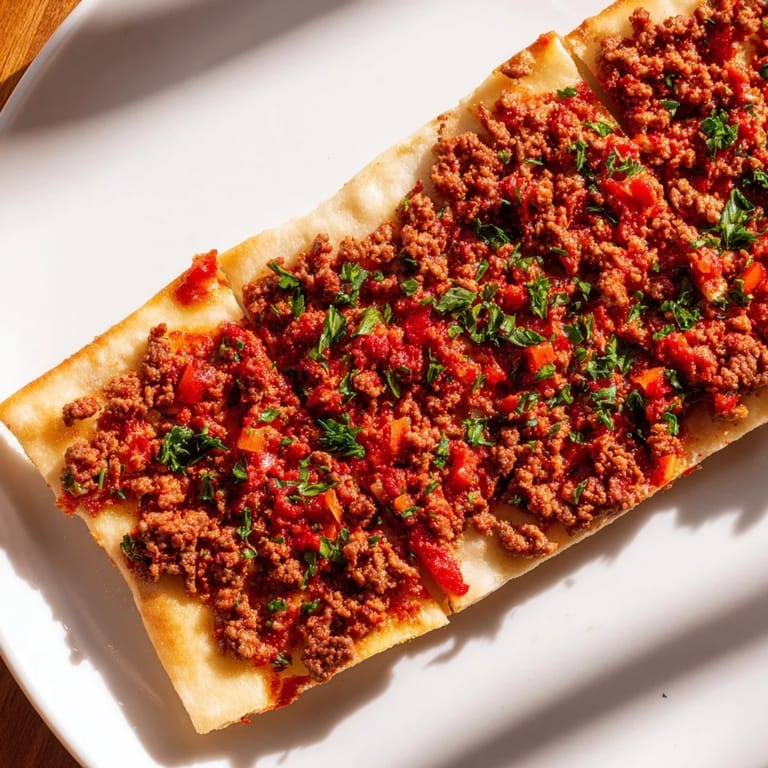
- Transfer each lahmacun to your scorching hot tray and bake for 6-8 minutes until the edges are golden and the topping is cooked through. The bottom should sound crispy when you tap it, and the meat should smell rich and aromatic.
- Finish and serve:
- Pull them out of the oven immediately, garnish with fresh parsley, and squeeze lemon over everything. Roll them up with fresh herbs and onions if you like, or eat them open-faced—both ways are right.
 Save
Save There's a moment while they're baking when the kitchen fills with that savory, spiced aroma that somehow smells both humble and luxurious. That's when I know everything is about to come together the way it should.
The Topping Is Flexible
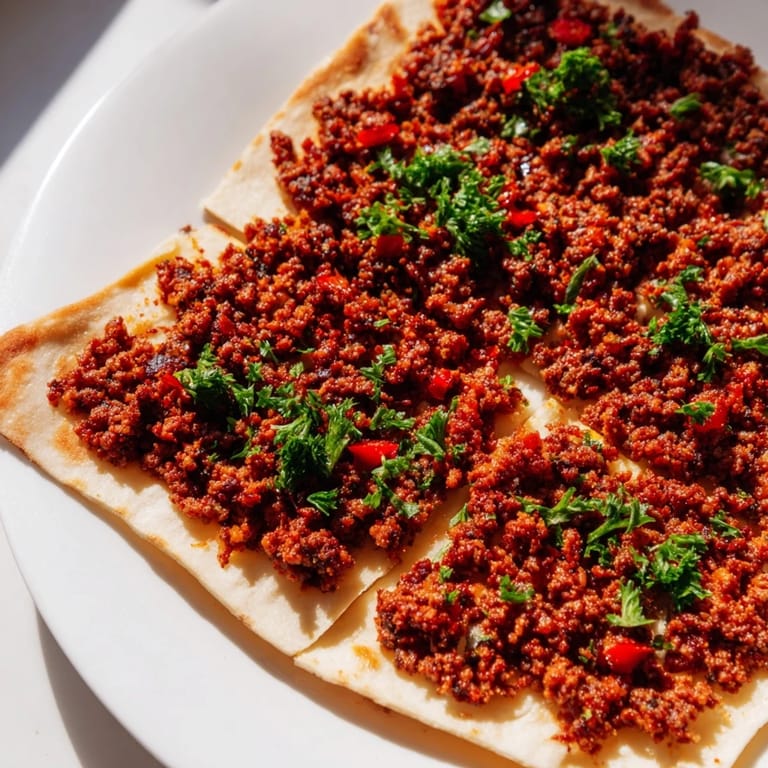
The meat mixture is really just a starting point, and over time I've learned that your preferences matter more than strict adherence to any single recipe. I've made it heavier on the tomato some nights, skipped the bell pepper when I didn't have it, and doubled the cumin when I was in that kind of mood. One winter I added a pinch of cinnamon and fell in love with the warm undertone it added, while a friend swears by a touch of sumac mixed right into the topping. Trust your instincts here—lahmacun is forgiving and wants to be adapted.
Serving and Pairing
I've learned that how you serve these changes the whole experience. Eating them straight from the oven with nothing but lemon is its own kind of perfection, but wrapping them around fresh herbs, sliced onions, and cucumber creates an entirely different moment—more interactive, more fun, more like sharing food as an experience. A glass of light red wine or that traditional yogurt drink called ayran turns it from a quick snack into something more intentional and satisfying.
Variations Worth Trying
Beyond the classic meat version, I've discovered that lahmacun adapts beautifully to what's in your kitchen or what you're craving. A minced mushroom and walnut mixture creates something earthy and substantial that vegetarian guests genuinely love, and I've had success with a spiced seafood topping when I'm feeling adventurous. The dough technique stays exactly the same, which means once you understand the fundamentals, the rest becomes play and experimentation.
- Try mixing feta or white cheese into a vegetable version for extra richness and tang.
- Fresh mint scattered over the topping just before baking adds brightness that surprised me the first time I tried it.
- Letting any extra meat mixture simmer gently as a sauce to drizzle over the finished lahmacun turns it into something even more indulgent.
 Save
Save Making lahmacun became one of those skills that opened doors for me in the kitchen, making Turkish food suddenly accessible and fun to cook. Now whenever I make them, that Istanbul market stall feels a little closer, and I get to give that same feeling to people I cook for.
Recipe Questions & Answers
- → What type of meat is best for the topping?
Ground lamb or beef works best, offering a rich flavor that complements the spices and herbs.
- → How thin should the dough be rolled?
Roll the dough to about 20 cm in diameter, thin enough to become crisp but sturdy enough to hold the topping.
- → Can I bake lahmacun without a pizza stone?
Yes, a baking tray works well to achieve a crispy crust when preheated properly.
- → What herbs enhance the topping flavor?
Fresh parsley is classic, and you can add mint or sumac for added brightness and aroma.
- → Is there a vegetarian alternative for the meat topping?
A combination of minced mushrooms and walnuts can substitute meat while keeping rich, savory flavors.